About Tom Fucoloro

As former editor of CDNews, Tom still helps out with coverage now and then.

Learn West African dance at upcoming Garfield Community Center program

Here’s a highlight from Garfield Community Center’s upcoming programming: A month-long series of West African dance classes:


The first session starts September 29 and runs until early November. The second session starts one week later. It’s $15 for a drop-in class or $65 for the whole series ($40 for youth).

To see what else community centers in the area have to offer, check out the fall brochure:

Fall12

SPD: Arrested suspect in weekend shooting downtown is member of a CD gang

Police have arrested a suspect they say shot a man at 2nd and Pike early Saturday. The suspect, an alleged member of a Central District gang, was arrested in Renton Thursday morning.

From SPD:

Gang detectives have arrested a Central District gang member for shooting a man on a downtown street early Saturday morning.

Around 3:15 am on September 15th, the 25-year-old suspect got into an argument with another man near 2nd Avenue and Pike Street. When the other man punched and shattered the suspect’s car window, the suspect pulled out a pistol, shot the man in the abdomen, and drove off.

Police arrested the 25-year-old gangster Tuesday morning at a home in Renton and impounded his car.

He’s currently being held at the King County Jail for assault and unlawful possession of a firearm.

In wake of arrest in Coleman shooting, SPD launches unsolved murder ad campaign

Less than a day after Seattle Police announced an arrest in the investigation into the 2008 killing of Quincy Coleman, the department launched a media campaign encouraging people to come forward with information about other unsolved murders.

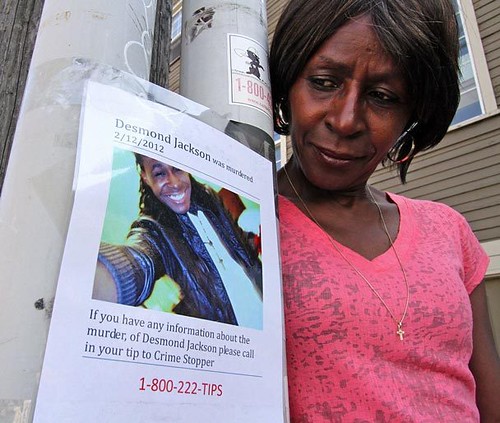
Among those most prominently featured is the CD’s Desmond Jackson, who was shot earlier this year outside a Sodo nightclub. Jackson’s Aunt Gazelle Williams, one of the campaign planners, told the Seattle Times it pains her to know Jackson’s killer is still loose:

“We feel really ripped off,” said Williams, who was one of three community members on an SPD committee that planned the launch of the “Who Killed Me?” campaign.

“It’s driving me crazy, the thought this person who killed Des is still walking around, going to parties and doing whatever he wants,” she said.

SPD Detective Rolf Norton told the Times that police often know who was involved, but don’t have enough evidence or cooperation from witnesses to pursue charges. This happened after the CD shooting of Tyree Lee, and it took officers years to gather enough evidence to arrest the shooter:

Those cases, with little evidence to go on, aren’t nearly as frustrating as “cases where you know who did it, but you haven’t reached the level of evidence to bring someone in for charges,” he said. “The fact you know who did it is a good thing. It’s just frustrating.”

As an example, he pointed to the April 2007 gang shooting of Tyree Lee in the Central Area.

Within the first week, detectives knew the names of those involved, but it took three years before they had enough evidence to arrest Jymaika Hutson, who pleaded guilty in March 2011 to second-degree murder and is now serving a 15-year prison term.

“The people who were lying to us eventually started telling the truth,” Norton said of that case.

Monday’s arrest of a suspect in the Coleman shooting came after the suspect’s friends went to police after he allegedly bragged about it. He has not yet been charged, but SPD identified him in a lengthy release as D’Angelo Saloy (UPDATE: He was charged Tuesday with First Degree Murder).

People with tips can call SPD’s homicide tips line at 206-233-5000. If you wish to remain anonymous, you can call Crime Stoppers of Puget Sound at 1-800-222-TIPS or send your tip online at crimestoppers.com. You can also text 274637: Type “SPD”  then the tip.

Police arrest suspect in 2008 killing of Quincy Coleman

Police have made an arrest in the 2008 Halloween slaying of Quincy Coleman near Garfield High School. D’Angelo Saloy, 20, was arrested Monday morning on suspicion of the crime, according to police.

Coleman’s death at only 15 shocked the neighborhood and prompted in part the creation of the Seattle Youth Violence Prevention Initiative, which works with youth in gangs and at-risk youth in an attempt to mentor them away from violence and hook them up with services they need.

Coleman’s name came up many times at a community discussion about violence earlier this month, held on the same block where Coleman was shot. The effects of a violent death of such a young person in the neighborhood is still being felt nearly four years later.

Saloy has not yet been charged with the crime, but Seattle Police released a lengthy statement with his name and details of the events leading to the arrest (UPDATE: He was charged Tuesday with First Degree Murder).

From SPD:

When D’Angelo Saloy walked out of the Washington Corrections Center in Shelton this morning—after serving a year  for unlawful possession of an AK-47, and assaulting an officer—detectives were waiting to put him right back in handcuffs.

Detectives arrested and booked Saloy, 20, for the murder of Quincy Coleman, who was fatally shot outside of Garfield High School in 2008 on Halloween night.

Saloy’s arrest came after an arduous four year investigation, driven by a slow trickle of information from witnesses about Coleman’s murder, polygraphs of possible suspects, searches by police divers, and surveillance, which captured Saloy urinating on a memorial for Coleman.

Coleman’s violent death was one of several in 2008 attributed to an ongoing feud between south end and Central District gangs, which ultimately led to the city’s Youth Violence Prevention Initiative.

Around 9:30 pm on Halloween night, Coleman and a group of his friends were standing behind Garfield, near the school’s baseball field, when a silver Ford Taurus sped down 25th Avenue and pulled up near the group.

Saloy opened fire from the back seat of the car, striking Coleman twice in the back and one of Coleman’s friends in the wrist and abdomen.

Coleman collapsed in a stairwell behind Garfield and died at the scene. His friend was taken to Harborview, and survived the shooting.

Over the next four years, Saloy admitted to several people—who later told police—he had shot Coleman in a rage over the death of a friend, Pierre Lapointe, who was shot and killed near Rainier and Graham in August 2008.

Coleman and the other man wounded in the shooting were both members of Central District gangs, while Saloy and LaPointe were members of the Down With the Crew gang from the south end.

Saloy—who took on the street name “Killa Casper” after Coleman’s death—also shared details about the shooting with friends, down to what caliber guns were used that night, and how he had ditched the guns at Mt. Baker Beach Park. Police divers later found four guns in the lake near the park, one of which matched the type of weapon used to kill Coleman.

During the investigation into Coleman’s death, police learned Saloy had made a visit to the site of the shooting, where he stopped to urinate on a memorial for Coleman outside of the school.

Saloy is being held at the King County Jail for investigation of homicide.

Mayor proposes changes to Langston Hughes PAC, Licata & Bagshaw call for community meeting

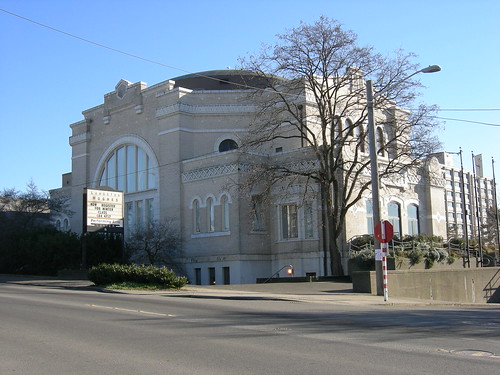
Newly renovated and reinforced against earthquakes, the Langston Hughes Performing Arts Center (“LHPAC”) may soon see operational changes, as well.

In a plan developed by the mayor and LHPAC leadership, the center could switch from being a Seattle Parks Department entity to the Office of Arts and Cultural Affairs (“OACA”). The move should not impact programming or funding levels, according to a press release from the Mayor’s Office. Rather it is supposed to help the center “become more closely connected with the broader arts community.”

OACA is also supposed to help the center find a financially sustainable operating model, which would be a huge shift for an organization that currently operates on a $740,000 budget, but brings in only $71,000 annually.

Councilmembers Nick Licata and Sally Bagshaw have already questioned the move, calling for a community meeting to discuss the neighborhood’s arts education needs and to dive into what sorts of changes would be required for LHPAC to generate more of its operating costs.

From the Mayor’s Office:

Mayor Mike McGinn announced today that his proposed 2013 budget will include a plan to support the Langston Hughes Performing Arts Center (LHPAC) into the future by transferring the cultural facility into the Office of Arts & Cultural Affairs (OACA) from the Department of Parks and Recreation. The addition of Langston Hughes Performing Arts Center as another program under OACA aligns with OACA’s mission and fits the purview of the Admission Tax to fund arts-related programs and keep artists living, working and growing in Seattle. The plan resulted from conversations with LHPAC staff, arts commissioners, and other arts leaders. 

“Langston Hughes is a valuable arts and community resource for the Seattle community,” said  McGinn. “I thank city staff, the Arts Commission and community stakeholders for their work to help the city better support Langston Hughes in the future. I especially thank Executive Director Royal Alley-Barnes for her leadership in making this new approach possible.”

“This is an amazing opportunity for underrepresented and marginalized grassroots communities to become highly visible in the city’s public performing arts scene,” said Langston Hughes Performing Arts Center Executive Director Royal Alley-Barnes. “Mayor McGinn has touched many hearts with this proposal, and has generated civic excitement by making LHPAC an operating unit in the Office of Arts and Cultural Affairs.”

Langston Hughes Performing Arts Center has a staff of 7 FTE and an annual budget of just under $740,000. It operates as a cultural performing arts center with major programs including the Langston Hughes African American Film Festival and a summer teen musical. The goal of the center is to provide quality cultural entertainment and educational components that meet the needs of the community.

The response from Councilmembers Licata and Bagshaw:

In response to this proposed transfer, Councilmember Nick Licata, Chair of the Housing, Human Services, Health and Culture Committee, offered the following statement, “While I support empowering the LHPAC to reach its potential for serving Seattle’s increasingly diverse arts audiences, I need to know how nearby residents, civic leaders, arts professionals and Seattle Arts Commissioners view such a transfer.”

Councilmember Bagshaw, Chair of the Parks and Neighborhoods Committee added, “Langston Hughes Performing Arts Center has been a fixture in the Central District and a gathering place for community and the arts for decades. While this transfer is intriguing and might look good on paper, I want to make sure that it feels good to the people who use it”.

Licata and Bagshaw plan on meeting soon with interested community representatives to explore the Mayor’s proposal for LHPAC. Questions heard from the community include whether there are clear goals and expectations for LHPAC’s future: Is it possible for LHPAC to evolve into a stand-alone non-profit or even for-profit venue? If so, should a steering committee of arts professionals and Central Area community members be assembled to guide the process? What are reasonable expectations for how long such a transition will take? How will staffing need to change? 

In addition to Central Area community members, the Councilmembers plan to invite OACA and DPR management as well as the Seattle Arts Commission chair and its members to participate in the meeting.

Times: Mayor’s budget includes money for more cops, gunshot locators

The Seattle Times reports that Mayor McGinn’s 2013-14 budget will include $1 million annually for ten additional police officers and $950,000 for 52 gunshot locators. He will unveil the details of his budget next week.

From the Times:

The city wants to install up to 52 mobile gunshot locator units, with each having a minimum 600-foot radius range and the ability to pinpoint a gunshot to within a 50-foot radius. The units also can stream video and determine the caliber of weapon that was fired with a 90 percent accuracy rate.

Hiring 10 new officers would bring the department’s total to 1,310.

East Precinct Captain Ron Wilson previously told the EastPAC group that he plans on requesting as many officers as possible if the city were to hire more officers. However, other Precinct Captains would likely do the same.

The gunshot locators are essentially microphones that help the police better track the location and frequency of shots fired incidents, which often go unreported. They may also help police know when reports are actually fireworks or a backfiring car engine. Today, they can’t confirm the shots unless they can locate evidence, such as shell casings or, of course, victims. Similar systems are used by many cities, including Washington DC and LA (the Wikipedia entry on the systems is worth a read for more information).

Neither hiring more officers nor a gunshot locator system came up at this week’s discussion about violence in the CD, which focused more on programming and neighbors getting to know each other better.

Man shot at 19th and Howell, injuries not life-threatening

Numerous shots were fired outside a residence near 19th and Howell around 11:15 p.m. Thursday night, police say. When officers arrived, they could not locate any victims, but did find a parked car with several bullet holes in it.

Shortly later, a male victim was dropped off at Harborview with a gunshot wound that was not life-threatening and did not require hospitalization. The victim declined to provide details to police.

From SPD:

Last night at 11:15 pm, East Precinct officers responded to numerous reports of shots fired outside a residence in the 1800 Block of East Howell Street with a large group of people present.

Officers arrived quickly and began looking for possible victims. No one appeared to be injured, however, officers did locate a parked car on East Howell just past 19th Ave that appeared to have been struck several times by bullets.

As officers were investigating the scene, another officer who was at Harborview Medical Center on an unrelated call reported that a male with a gunshot injury had just arrived at the hospital in a private vehicle.

The man had a non life-threatening injury which did not require hospitalization. The victim and the witnesses directly associated with the incident told officers that they only heard the shots and refused to provide any detailed information.

It was discovered that the victim had several outstanding felony warrants for his arrest, so after he was discharged from the hospital, he was arrested and booked into the King County Jail. Gang Unit detectives also responded to the shooting location and processed the scene.

One of the most dangerous intersections in Seattle is in front of Garfield High School

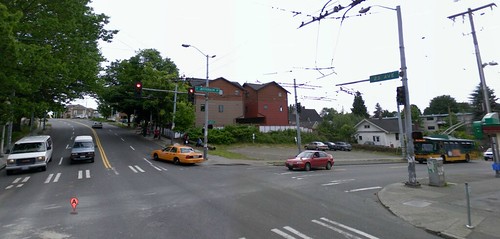
One of the most dangerous intersections for people on foot is at 23rd and Jefferson, in front of Garfield High School and Ezell’s Famous Chicken. Five people were struck by cars between 2009 and 2011, making it one of the worst spots in the city for people walking, the PI reports.

The report comes on the heels of the city’s new Road Safety Action Plan, announced in late August. The plan has the goal of reducing traffic deaths to zero by 2030 through a combination of safe road engineering, enforcement of traffic laws, education and “creating a culture of empathy” on the road. I wrote about the plan over at Seattle Bike Blog (for those not familiar with my other work, road safety is a particular passion of mine).

Below is the full Road Safety Action Plan. 23rd Ave is scheduled for repaving in 2014. What would you like to see happen on the street to make it safer?

UPDATE: I just received a press release from the Puget Sound Regional Council (which hold the reigns on lots of Federal transportation grants) that includes these two line items:

·         23rd Avenue Corridor Improvements  – South Jackson Street to East John Street – $3,500,000

·         23rd Avenue Corridor Improvements  – South Jackson Street to East Madison Street Preservation – $1,500,000

We’re working to track down more details. Stay tuned!

SDOT-SafetyActionPlanWEB

At meeting, Garfield Community Center announces series of conversations about violence

The crowd at Tuesday’s follow-up discussion about violence in the neighborhood was much smaller than the packed house that showed up in the wake of the killing of Justin Ferrari and the Cafe Racer shootings in May. If the May meeting was a much-needed chance for people to voice frustrations, fears and hope, Tuesday’s meeting was an attempt to keep the conversation going, even if it had no clear plan for action.

Garfield Community Center Director Mazvita Maraire announced that the center will host an ongoing series of discussions about violence every few months. The talks are a way to get more neighbors to meet each other, hear each other’s stories, fear and hopes, and learn about ways to get involved.

The meeting was a little bit disjointed as people talked about their projects and their thoughts on causes and solutions to violence. Below are some of my notes (if you were there, please add anything I missed to the comments):

Pastor Greg Banks from First AME and one of the founders of Standing in the Gap Seattle was the moderator for the discussion. He said Standing in the Gap decided to hold their CD-South Side march last weekend because they wanted to get ahead of the violence instead of simply doing prayer vigils after shootings.

“We decided we were being very reactive, and we decided to be proactive,” said Banks.

Robert Stephens talked about his work to get the Garfield-area “Superblock” active in encouraging positive safety changes around the Medgar Evars pool, which could include things like tree trimming, better lighting and chances for art projects.

For the sake of conversations about violence, he said residents need to move past throwing blame around to other groups.

“It needs to involve everyone who lives in the neighborhood,” he said. “It’s not an all-white neighborhood and it’s not an all-black neighborhood. At some point, we need to celebrate the people who are here.”

East Precinct Captain Ron Wilson said that shots fired incidents are down throughout the precinct compared to recent years. He said part of the perception of increased shootings could be because “instantaneous news makes it seem like there’s more.”

Much of the conversation centered around youth programs, and several employees of the city’s Youth Violence Prevention Initiative attended. They urged solutions that addressed issues in school instead of sending kids to “Gang University,” A.K.A. the Juvenile Detention Center.

But they also urged the group not to “criminalize youth,” especially for young black men. Much of the recent violence was by people older than the ages targeted by current programming, and there are few resources for people returning to the neighborhood after getting out of prison.

Several mothers talked about not knowing how to prepare their sons for dealing not just with violence, but also the prospect of racial profiling from the police. Foxy from Cortona Cafe asked Captain Wilson if he thinks there is a racial profiling problem in SPD.

“The Department of Justice said there was a concern that it is occurring,” said Wilson. “We don’t tolerate it.” However, he admitted that people often feel racial profiling is occurring.

“SPD needs to remove the perception that stops are racially charged,” he said. “We need to get better at talking to [detained] people and let them know why we’re doing what we’re doing at the very first safe opportunity.” If something does happen, he urged people to file a complaint with the Office of Professional Accountability.

Several residents expressed concerns about the long-standing perception that there are “two Garfield High Schools,” with well-to-do kids in the advanced classes on the top floor and the rest on the bottom floors.

At the heart of the challenge the neighborhood has as it tried to make changes to improve safety is the fear that those changes will leave out some residents or make some people feel unwelcome. At the May meeting, one man said he grew up in the neighborhood, but “I don’t know anybody on my streets anymore,” he said. “That breeds tension.”

This point moved conversation to the need for more people to get out and get to know their neighbors and be active in places like the Garfield Community Center and the Garfield Teen Life Center.

This seems like a perfect way to open conversation here on CDNews: What ideas do you have for giving people a better chance to get to know their neighbors? I’ve got one: The city should expand the streamlined block party process they use for National Night Out to encourage multiple block parties throughout the year rather than just one.

Meeting Tuesday to discuss new park at 19th/Madison

Want to get involved in the planning for a new park at 19th and Madison? There is a meeting at 5:30 p.m. Tuesday at the Hearing, Speech and Deafness Center next door to the future park site.

The park’s boosters received a $15,300 grant from the Department of Neighborhoods for a public meeting and design process to create a community-supported plan for the park. The goal is to create a park “for all ages and abilities” that is safe, relaxing and fun.

There will be meetings as the design develops over the next year, at which point fund raising will kick into high gear to make the park a reality.

You can get involved by showing up to meetings and by following the park on Facebook.