Budget, transportation, and policy effects dominate Part II of Kay Smith-Blum meeting

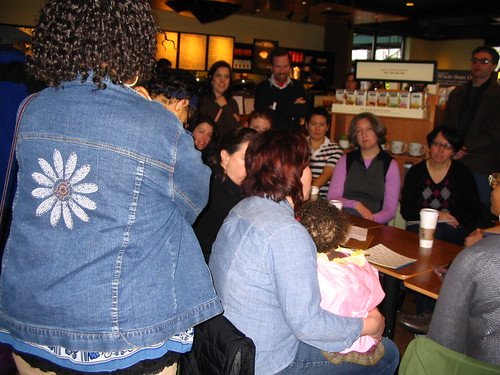
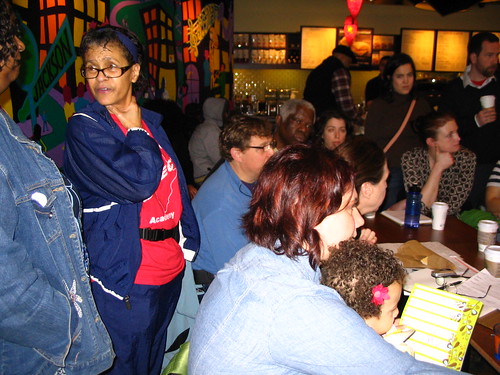
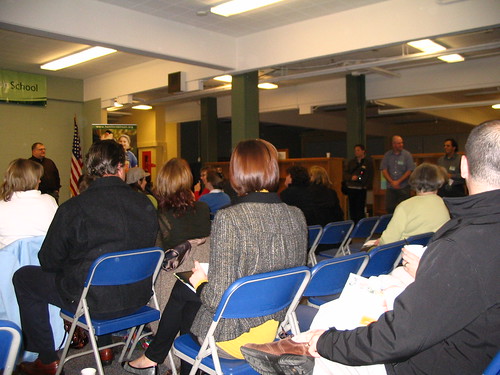
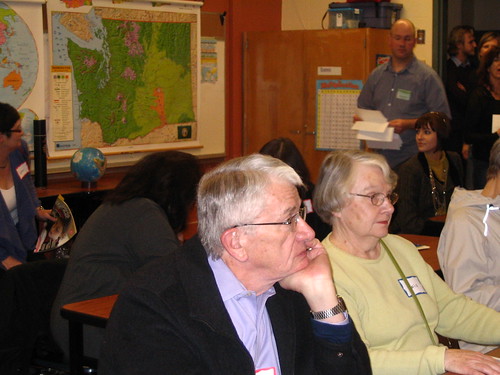
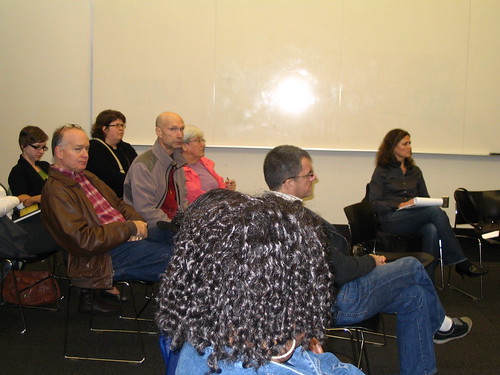
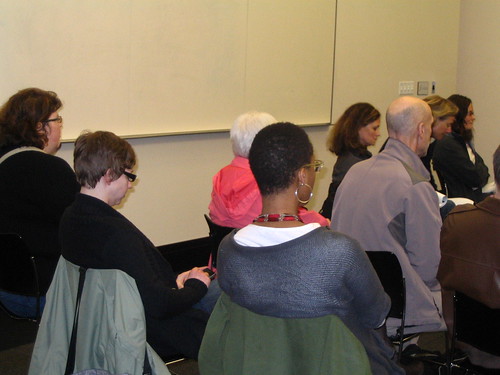
About 15 to 20 community members and parents attended the second and original/official School Board Director Kay Smith-Blum community meeting on Saturday morning at the Douglass-Truth Library (see Part I).   The more relaxed space and time allowed for a more focused discussion on each topic.  School budget, transportation, the World School (Secondary Bilingual Orientation Center), and Special Education were dominate, along with a question wondering if the School Board meetings are still  being televised or streamed live.  

A representative from the the former Garfield Design Team raised questions about joint use agreements between the District, the community, and Parks especially in regard to the Quincy Jones Auditorium and Langston Hughes Cultural Arts Center.  He was also interested in pursing and finalizing some of the plans for the super block (23rd to 25th Avenues, and E. Alder to E. Cherry) as had been outlined in the Garfield plan.  While the District is not necessarily responsible for funding art and parking mitigation, he was hoping to reconvene the Team to, for instance, help the community decide on the art work which was suppose to represent all 5 of the major ethnic groups that have lived in the Central District.  This type of work is necessary in order for the community to pursue the funding.    Kay took notes and referred him to the new Director of Facilities, Bill Martin.

Director Smith-Blum indicated that there may have been some recent changes in the how the School Board Meetings are broadcast in response to a question.  The videos are definitely still available on Channel 26 and likely broadcast live there.  Videos of the meetings are streamed on the Seattle Channel but perhaps no longer streamed live.  She suggested contacting Erinn at the School Board office:(206) 252-0041.

While a representative from TOPS was the attendee to express concern regarding the new transportation plan, it is probably something many in Area 4 should note as there is a portion of Area 4 not within 1.25 miles of any school, especially  the assignment area school.  Under this proposal (yellow bus service) would not be provided to students attending and living further than 1.25 miles of their assignment area schools. These policies as outlined in the link below would profoundly affect Option schools.  TOPS presented Kay an analysis to demonstrate that carrying through with the transportation plan for TOPS may actually prove to be more costly than the current one.

http://www.seattleschools.org/area/transportation/index.dxml

http://www.seattleschools.org/area/board/10-11agendas/011911

Transportation Meetings for public engagement:

Thursday, February 3, 2011,6:30-8:00 p.m., Hamilton Int’l Middle School,1610 N. 41st St., Seattle, WA 98103

Tuesday, February 8, 2011, 6:30-8:00 p.m., Chief Sealth Int’l High School, 2600 S.W. Thistle St., Seattle, WA 98126

 A parent who had been a member of an advisory committee addressing Integrated Comprehensive Services (ITC)  questioned if the the current situation for the inclusion vs the self-contained rooms is being fairly represented to the Board by District staff.  Kay indicated that the Board is award of some the successes and some of the challenges, and that the Board may request a separate report with more details regarding the challenges and professional development in that area.

In response to budget concerns Kay indicated that the Board is definitely looking to keep those as much as possible away from the classroom.   The Weighted Student Staffing (WSS) formula determines much of the classroom staffing.  Leaving that alone is the number one priority.    Central Administration is still one of the main areas considered for cuts since Seattle still has a fairly high ratio of their funds going to the central staff compared to other similar districts. Renegotiating union contracts especially in the area of benefits is something she supports. Cuts to new more costly initiatives in the Strategic Plan are also under consideration.  Here Kay received kudos from representatives from the World School for her advocacy to protect the plans to allow students to remain at the school longer and until they are older.  Despite the fact that a community survey seemed to indicate that the public supported cuts to central staff and sports, the District is not considering cuts to sports. 

Kay agreed with proponents to change or at least review the District’s difficult policies regarding allowing high school student to transfer schools at semester, especially in the case where the exit and receiving school agree that this would serve the student well.

Kay made two announcements:  A contract with Teach for America (TFA)  has been signed allowing their corp members to be considered during the third round of hiring.  In response to questions she said she supported taking a look at what percentage of new hires they would be.  She also let the community know that Garfield is working to eliminate the second year of sanctions for their football team.  The final decision on this should be known within a couple of weeks.
Saturday School Meetings, Part I: Area 4, Madrona, and Stevens families bring questions

About 30+ parents and community members crowded around a table the 23rd and S.Jackson Starbucks on Saturday morning for a lively but rather scattered exchange regarding the boundary changes that Kay had proposed for Area 4.  (She had proposed that the area south of Madison in the Stevens assignment area, Area 4,  be reassigned to Madrona.) The contingency of parents from Stevens, Area 4, and Madrona expressed opinions, shared information or listened. In addition to parents and community members Madrona Principal Farah Thaxton  attended and listened, and  representatives from Hamlin Robinson were there to express their desire to continue the lease of the TT Minor School for 7 years if not indefinitely. 

(Oops, this paragraph was inadvertently deleted..) As Kay perceives the issue it is related to the fact that Stevens is never under-enrolled and that there are usually more families wanting to go there than the space allows.  In the meantime, Madrona tends to be under-enrolled with space for more students.  While this may not align with the number of students living in each area the situation has worsened as siblings of  Stevens students who do not live in the current attendance area desire admission to Stevens and the Area 4 families have embraced Stevens as their attendance area school.  If the siblings continue to be admitted the situation is not sustainable.  She advocates that  parents in Area 4 and Madrona work together for a solution, meaning that area 4 willingly make Madrona a choice and embrace that school so that the current families at Stevens can continue at Stevens.

While Kay clearly understands that TT Minor is the heart of where a most of the students live, she is not an advocate of reopening TT Minor  during the next three years.  Under the current enrollment patterns there is space in the central part of Seattle for the students living there for at least another 3 years.  She did note that Thurgood Marshall does not have many attendance area students.  Much the enrollment information is now on the District website.  Section 4 would be most directly related to this.

Madrona parents mainly listened and presented information about the school as questions were posed. Those from Stevens were a mixture of those in the assignment area, including Area 4, and those who have been drawn out the assignment area. who mainly listened and offered comments on the current situation.  Area 4 parents listened and some expressed that even though Kay withdrew the amendment, that they are disappointed in her bringing the amendment  that reassigned Area 4 to the School Board for a vote without community engagement.   Space and time did not allow for any substantive understandings or conversations.   Kay promised to bring all together for another meeting and to continue communication through email.  The meeting adjourned here so that she could be present for her meeting at Douglass-Truth.  She encourage all to contact  her by email, [email protected], or to contact  Erinn Bennett, Board School Board, Office Manager (206) 252-0041 for specific documents.

Just a few  side notes: I am not sure how this would eventually play out.  If  such a boundary change were to be made then there would be too many students living in the  Madrona area for the capacity of the school.  There would be too few actually living in the Stevens area.  Who then would be allowed priority for enrollment at Stevens?  How would this all be redrawn and balanced?  I suppose another way to balance everything would be to split area 4 off into more than one assignment area?  I personally think this last one would be unconscionable in terms of the effect on the community of families.  As currently drawn the Stevens and Madorna assignment areas are fairly well balanced regarding the number of students living within each.  The problem arises regarding where students are choosing to attend school. )

Experiencing Dyslexia

Walk in the Shoes event at Hamlin Robinson, 1700 E. Union, Seattle, WA 98122, Wednesday, January 26, 2010

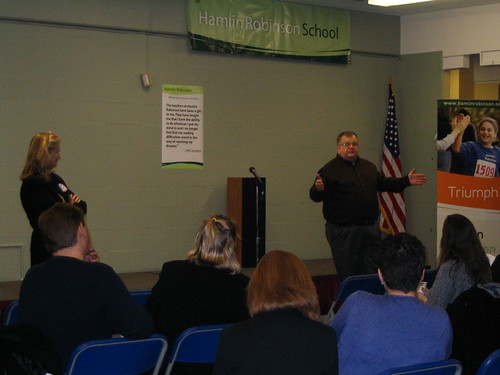
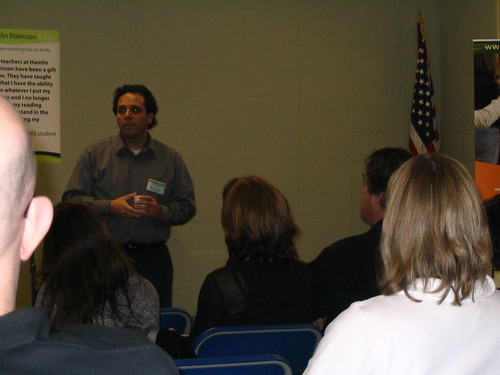
The Hamlin Robinson School specializing in educating students with dyslexia and related learning disabilities invited the community to participate in an event intended to simulate the experience of dyslexic students in a regular  classroom with teachers who are not able to accommodate their needs.  The audience of about 50 consisted mainly of parents of current Hamlin Robinson students, the staff,  and one or two parents of students in the community who have at some time struggled with identifying these resources for a child. 

The evening began with a welcome and introduction of the Head of School, Joan Beauregard, and  the staff who were present.   Hamlin Robinson is very grateful for their great new location and building and hope to become a continuing resource at this site.   They love being in this neighborhood and invite members of the community to schedule tours of the school.

The group then divided into three groups which rotated through writing, reading, and spelling (listening) classes.  Yes, the simulations did provide at least one or more experiences of  frustration for almost everyone.  As frustrations grew people, put their heads on their desks, grew silent, gave up, joked with neighbors and teachers; one in my group spent time flattering the teacher.  I rather enjoyed the reading exercise where the letters did not resemble the alphabet that we are use to seeing but were consistent in what they represented. As a decoding exercise this was interesting to me, but this was not true for all. The writing exercise required participants  to write with their non-writing hands which they could only observe in a mirror; thus normal hand eye coordination was not available.  This was surprisingly difficult and a bit frustrating.  Here I wasn’t feeling great but remained engaged in figuring out how to do this. I was, however,  happy enough to move on to the next class.  In the last class the presenters purposely mispronounced words, invented words and odd spellings and rushed through a list.  Here it seemed impossible to get it right or figure out how to make a correct spelling, and the teachers did not seem to be in anyway helpful.  I found myself feeling angry.  This, of course, was to simulate the experience of those whose sensory is in someway impaired.

The staff who were present to answer questions after the exercises were an incredibly knowledgeable and involved group.  One teacher is currently President of the Washington Dyslexia Association and directed us to look further at the Slingerland Institute for Literacy, http://www.slingerland.org/ , for more information on the teaching methodology.  Multisensory, structured, and sequential were key terms used to describe this complex understanding of teaching and learning.  The school emphasizes small class sizes, individual attention, and empowering their students to advocate for themselves and their needs for success here and in future settings.

Students do not have to be current Hamlin Robinson students  to participate in the upcoming  summer programs.

Information regarding admission to the school, applying for summer programs, tuition rates, and scheduling tours may be found on their web site: http://hamlinrobinson.org/

Hamilin Robinson is currently leases the the TT Minor building at 17th and E. Union from the Seattle School District.

Join the Squire Park Community Council’s conversation on public safety.

Join Busybody Neighbors

Attend.  Bring us your ideas. Bring your projects. Bring us your friends and neighbors.  Consider becoming a Board member. 

On Saturday, January 8,  we will be presenting a program featuring Seattle’s Deputy Chief of Police Clark Kimerer and City Councilmember Tim Burgess, Chair of the Public Safety and Education Committee, along with representatives from the East Precinct Crime Prevention Coalition. The Squire Park Community Council will  also be electing new Board members.

Issues of public safety are multi-pronged. Beyond catching the bad guys, public safety encompasses issues of economic development, social justice, and neighborhood cohesiveness and caring for each other.  Engaging  with our public servants is one important step.  But,  this must be combined with building a sense of connection, continuation, and identity  if these efforts are to have any lasting affect.

Recently, a long-existing community council for a neighborhood near Squire Park faced what its President termed a “crisis”. Only five people showed up at the meeting where that community council was scheduled to select  board members for the next year.  In a call to service on the CentralDistrictNews.com the community council president called the situation “disheartening”. Discussion followed. One writer trolled “(t)here is nothing more irritating than busybody neighbors who want to have a say in their neighbors’ business. For anyone who wants to get involved in their community, I have only one thing to say: GET A LIFE and leave your neighbors alone. “

If, on the other hand, you’re more open to taking part in an effort with your neighbors to build community through the community council join us at CAMP on Saturday morning, January 8th. Online communication among community members can be very important. However, it does not replace getting together face to face. In response to the troll, another commenter wrote “I believe a sense of neighborhood and neighbors directly impacts quality of life — and kids’ quality of life.”

One of the most important foundations for any neighborhood to develop is a sense of identity and working together to enhance the livability of the area. During the last decade vacant buildings became homes, and places where residents can congregate and socialize have been developed. Nonetheless, there is more to be accomplished in order to fully realize vitality of the neighborhood and its rich diversity.  

Exactly what the community council works on, and the measure of success it can achieve depends on the participation of neighbors. That could be you. The SPCC Newsletter goes to more than three thousand households. We hope the Newsletter gives you some information that’s news to you. But, a primary goal of the Newsletter is to encourage you to join us for  the quarterly meetings. Please join the Squire Park Community Council in January  for coffee, refreshments and conversation, and  please consider becoming a new Board member.

*Boundaries as established in the 1980’s, are 23rd Avenue, E. Union Street, 12th Avenue, and S. Jackson Street. SPCC is the City-recognized organization that advocates for efforts to protect and enhance neighborhood livability and vitality.

10:AM to noon, CAMP 722 18th Avenue, Saturday, January 8, 2011

Update on solutions to Garfield High School Overcrowding

Solutions for Overcrowding at Garfield Presented

Garfield’s current enrollment is about 1780 and the capacity of the school is about 1680. Due to the fact that more students than had been anticipated could show up again next year, the District has proposed a number of possible ideas or various combinations of ideas to offer a solution.  By the end of December it appeared that the Board and District staff were leaning toward a combination that included decreasing or closing the open choice seats at Garfield for next year, developing a voluntary  International Baccalaureate/APP option at Ingraham High School, tweaking the southern boundary between Garfield and Franklin, a split schedule, allowing any students who live in the Garfield area first choice on any other high school they might want to attend, and as a last resort possibly placing portables on the site.  These were all in hopes of finding a balance between being prepared and not overreacting, which might result in shutting students out unnecessarily.

The School Board will be making a final decision on January 19th as a part of the Transition Plan 2011-12 which will determine the rules for phasing-in the New Student Assignment Plan.  Comments should be addressed to the School Board members and public comment will be allowed at the beginning of the meetings below. Contact and public testimony information can be found:

http://www.seattleschools.org/area/board/index.dxmlhttp://centraldistrictnews.com/2010/11/07/what-are-the-solutions-to-garfields-over-enrollment

School Board Meetings

Jan. 5, 6 p.m., School Board meeting –Transition Plan introduction, JSCEE Auditorium

Jan. 19, 6 p.m., School Board meeting –Transition Plan vote, JSCEE Auditorium

New Student Assignment Plan: Today is last chance to ask questions one-on-one.

http://www.seattleschools.org/area/news/1011/20101201_Resche


Dec. 14,  6-8 p.m., Drop-in session, JSCEE Room 2750

Dec. 15, 4-7 p.m., School Board work sessionIntegrated Planning,  JSCEE Auditorium,

Jan. 5, 6 p.m., School Board meeting –Transition Plan introduction, JSCEE Auditorium

Jan. 19, 6 p.m., School Board meeting –Transition Plan vote, JSCEE Auditorium

The Transition Plan for 2011-12, will determine the rules to for  phasing-in of the New Student Assignment Plan. If you have questions regarding data and the plan or want to offer suggestions or comments on the Transition Plan the informal drop-in sessions are the opportunity to meet with staff to share data and information about enrollment trends, options being considered for capacity management across the District. More information can be found: Transition Plan website

Forum on the Tunnel with the Mayor and Councilman O’Brien

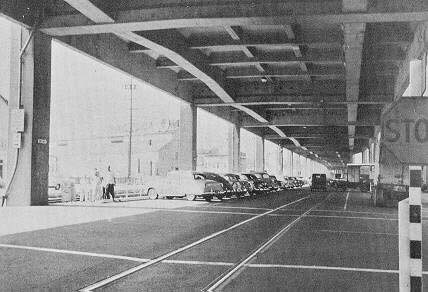
Please join Councilmember Mike O’Brien, Mayor McGinn and other guests for a discussion about the shortcomings in the latest environmental document released by the state regarding the Alaskan Way Viaduct Deep Bore Tunnel Project Wednesday, December 1st at Town Hall (8th and Seneca). Doors open at 6:30pm, and the discussion begins at 7:30pm.


I hope you can join us!

You can read the state’s version of the project’s cost/benefit analysis here. Meanwhile, Seattle Transit Blog has a thoughtful piece on the situation here.

Deep-Bore Tunnel—What Could Go Wrong?
Wednesday, December 1, 2010, 7:30 – 9pm
Downstairs at Town Hall, enter on Seneca Street.

Governor Gregoire recently announced that bids for the deep bore tunnel on Seattle’s waterfront are at or below budget; tunnel opponents scoff at the likelihood they’ll stay there, and maintain that Seattle will be left holding the bag for inevitable overruns. And this is just the latest battleground—after years of bruising political battles, opponents still voice concerns about tolls and downtown access, while many proponents seem glad simply to have a plan to replace the endangered viaduct. Washington’s Department of Transportation is accepting public comment on the project until December 13th, so if you take them at their word, the conversation isn’t officially over yet. Advancing the skeptics’ case, Stranger news editor Dominic Holden will moderate a session with Mayor Mike McGinn, Councilmember Mike O’Brien, and Drew Paxton (Move Seattle Smarter). Presented by The Stranger.

Free, no tickets required.

Snaps of Squire Park temporary art space to snow falling on cat

These are pictures from what I have seen in the neighborhood since it started to snow and my internet went out. ( In the past I have posted positive comments about Qwest. They can’t fix it until at the earliest on Saturday.  No more positive there. That will be separate story.)  I am currently at a local coffee shop.  Thank goodness for the the coffee shops here.

Snow disappears quickly.  The air and sidewalks seem strangely clear today.

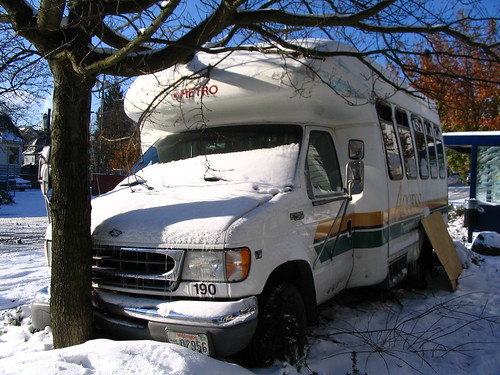
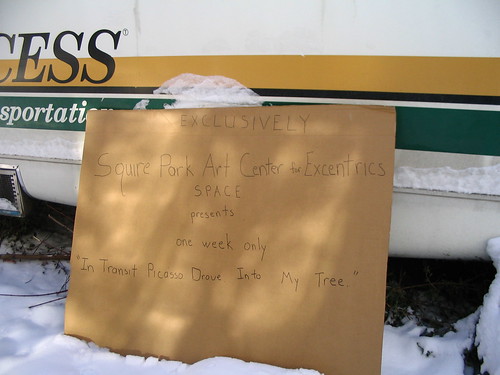
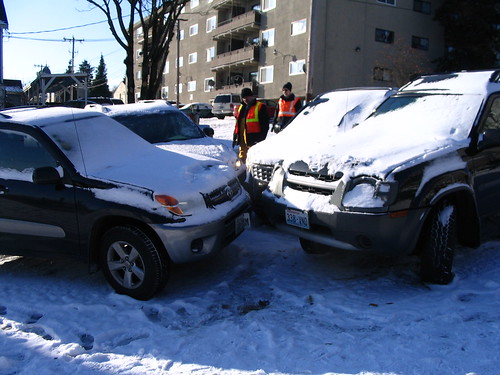
The Squire Park temporary art space Access van  picture was taken Tuesday morning at 20th and E.Union.  The four SUVs stuck together between 18th and 19th on E. Union was also snapped on Tuesday.  Either  they didn’t make it down the hill or up, not sure which one.

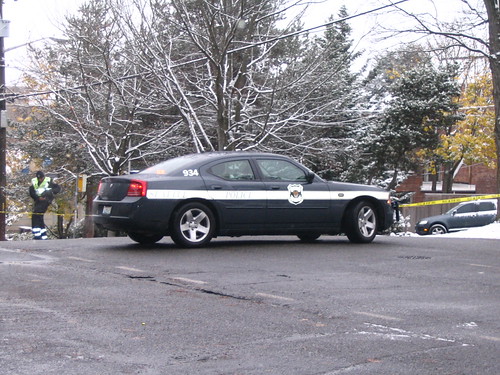
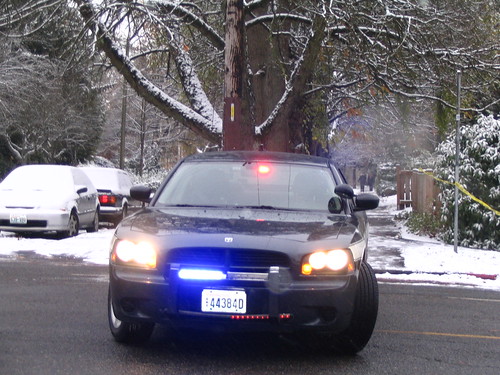
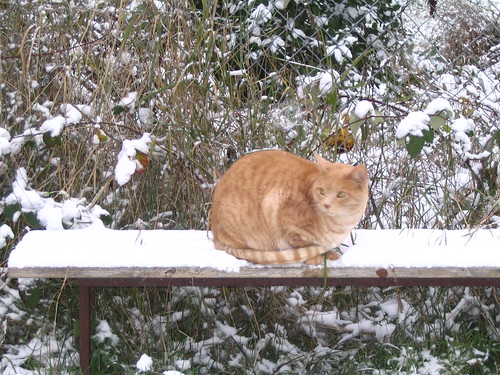
The last ones are  from Monday.  After the #2 was rerouted I was walking home and snapped the pictures of the police action, not knowing what had happened.  And, there is snow falling on cat.

Metro Snow Routes in Effect for Tuesday Morning

Below is a message from Metro received around 10:00 PM tonight, Monday.

Metro Transit buses will be on snow routing Tuesday morning. 
 Unsafe roads may cause cancellation of some routes

www.kingcounty.gov/metro

 King County Metro Transit is keeping all buses in all areas on snow routes for Tuesday morning.
Buses will be crowded and significantly delayed, perhaps even worse than Monday, due to road
conditions. If those conditions severely deteriorate overnight, Metro may have to cancel entire bus
routes in the morning. 
Most specific cancelations won’t be known until 4:00 a.m. or later.  All transit riders are advised 

to check Metro’s Snow & Ice page before they travel. 


Bus riders should visit www.kingcounty.gov/metro/snow for the most current status of Metro service
before traveling on Tuesday. Online updates will begin at 4 a.m. If you do not have internet access,
call Metro’s Customer Information Center at (206) 553-3000. Due to the volume of calls, there could
be a wait on the phone lines. 

Roads throughout the Metro service area are expected to be extremely icy and hazardous Monday
evening and Tuesday morning. There are also many abandoned vehicles blocking the roadways. 

Please be patient, and dress warmly for waiting outdoors. Returning to regular service will be
evaluated again after the morning commute. 

Access transit service is limited to life-sustaining medical trips only through 9 a.m. Tuesday due to
deteriorating road conditions on both arterials and local streets. 

When buses are on snow routing, some streets and bus stops may be missed and there are often
delays due to travel conditions. There is new snow routing in many areas that is different from past
years, so be sure to check the snow routes for all the routes you use most often. 

Not all routes have snow routes, but many do.  Sometimes snow routes have to be added or modified
during an event. 

Metro has these tips for winter bus travel. 

Know the snow routing for your bus route. Check the timetables at www.kingcounty.gov/metro for snow
route maps for each route. Not every bus route has snow routing, but most do.

Metro routes 38 and 45 don’t operate in these conditions.

Special bus service – Route 90 – operates between downtown and First Hill. 

Metro is using a new online color-coded map to keep riders informed of the status of its bus service.
Bus routes are assigned into one or more of seven geographic areas within King County. 
 
When there is snow or ice on the roads, the service status of each area is color coded and displayed
on an online snow map. Green indicates buses are operating on normal routes; yellow that some – but
not all – routes in the area are on snow routes, and red tells you that all bus routes in that area are on
snow routing. 
 
People without online access can call the Customer Information Office at (206) 553-3000.

General information about service will also be sent out via the kcmetrobus Twitter account. 
 
Here are some other snow tips for Metro customers: 

• Be patient. Buses are not always on schedule in snowy or icy conditions. Increased ridership
   during bad weather can result in crowded buses and a longer-than-usual wait on the phone for
   the Customer Information Office. If you get a busy signal, hang up and call back;  
 
• Expect delays.  Dress warmly for the walk to the bus stop and wear appropriate footwear for the weather;  
 
• Wait at bus stops on flat portions of main arterials or at major transfer points such as park-and-ride
  lots, transit centers, or shopping centers;  
 
• Online programs like Bus Tracker and other privately developed apps become less reliable in bad-weather
  conditions, as more buses go to snow routing and service is increasingly disrupted. Metro’s online Trip Planner
  does not have real-time information.  Check for service disruptions and make necessary adjustments to
  travel plans.

Metro will provide updates as new information is known.

Thanks for your patience and for using Metro’s services.  Travel safely.


www.kingcounty.gov/metro