Sculpture to honor life of Madison Valley flood victim

Kate Fleming was killed when her basement flooded during the Hanukkah Eve Storm of December of 2006. There have been several suggestions of ways to honor her life, including from CDNews members who have suggested that the new stormwater detention pond and park be named in her honor.

According to a recent email from the city, the parks department is working with artist Charlene Strong on a plan to erect a sculpture in remembrance of Fleming, as part of the second phase of stormwater improvements planned for the valley.

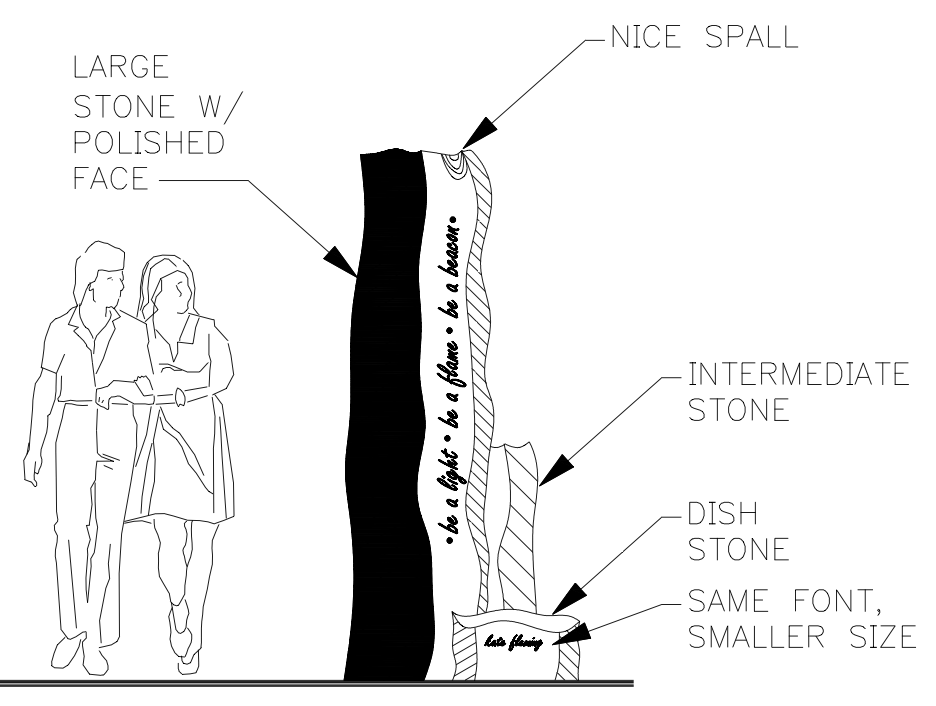
The 8 foot tall stone sculpture would have a polished face, and engravings on the side that say “be a light – be a flame – be a beacon”. Fleming’s name would be engraved on a smaller stone attached to the larger one.

Installation is targeted for the fall of 2011.

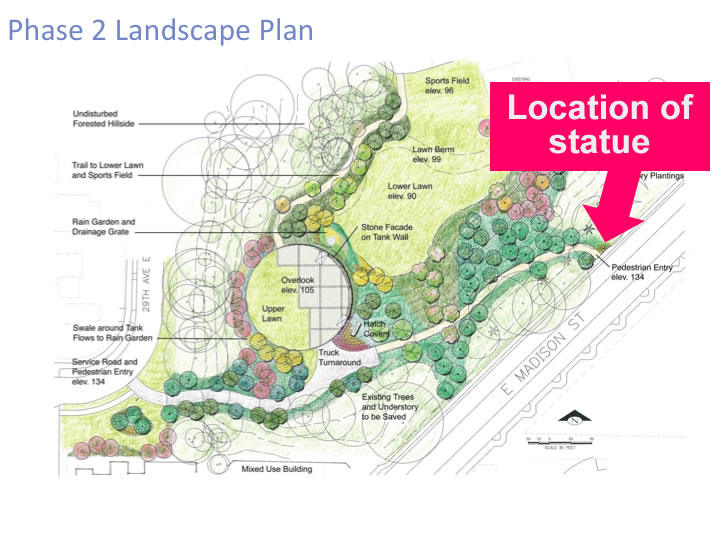
The sculpture will be placed on the north side of Madison Street, adjacent to a new path that will lead pedestrians down to a landscaped area in Washington Park where a large stormwater storage tank will be placed.

Madison Valley Parking Walking Tour on Thursday 6/3

SDOT (Seattle Dept. of Transportation) , as part of its Community Parking Program, will be studying parking in the Madison Valley neighborhood.  The process takes about a year.  The initial step is a walking tour of the neighborhood.

All interested residents and business owners are invited and welcome to join the walking tour, which is scheduled for Thursday, June 3, 2010, commencing at 1:30 p.m. at the entry of the Bailey-Boushay House.

If parking in our neighborhood is a serious concern of yours, this is your first opportunity to get involved in understanding the challenges and developing a parking plan.   Please RSVP to [email protected] if you can attend.

Street robbery suspect caught last Friday

We’ve found a new police report that details a street robbery that occurred early last Friday morning in the 700 block of 22nd Ave. One of the two suspects was caught and has been charged in the crime.

According to the report, the victim was walking southbound when he passed two other men. After he passed them, one came back up behind the victim and put him in a choke hold. One suspect repeatedly punched, strangled, and threatened the victim with a gun while the other rifled through his pockets.

The suspects ran off northbound with $20 and the victim’s debit card, but left behind one of their cell phones that was dropped during the scuffle. The victim then continued southbound towards Cherry, when he again encountered the suspects who had come back to get the cell phone. One suspect chased the victim into the nearby AM/PM where he asked the clerk to call 911.

Police responded and found one of the suspects nearby and made an arrest. He was searched at the precinct and found with several small bags of marijuana and a small bag of crack cocaine. He was booked into jail on investigation of robbery and drug possession.

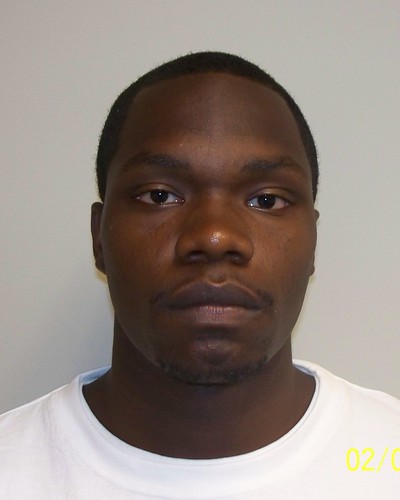
That suspect, 24 year old John Arlen Stanley, was charged with First Degree Robbery and Violation of the Uniform Controlled Substances Act yesterday. He remains in jail on a $100,000 bond.

Stanley has a lengthy rap sheet that includes previous convictions for robbery, theft, possession of stolen property, and other drug charges. Court documents list his last known address in the 2800 block of 11th Ave E. 

The second suspect has not been located.

(editors note about names/photos: It is CDNews policy to only include suspect names and photos once they’ve been charged with a crime. Booking photos are only available from the state Department of Corrections if the suspect has previously served time in the state penitentiary system, which is the case for this suspect)

Parks funding will go to Madrona Beach, Woods

With $50,000 of gift funding to work with and eight project proposals to choose from, the Madrona Community Council had weighty decisions before them at the final council meeting before the summer break.

After an hour and a half of discussion last night, the council voted to allot $45,800 worth of the Martin and Mimi Kraus Gift to four of the proposals submitted. The largest sums went to the Madrona Woods and Madrona Beach, who both received the full amount applied for.

Driving the council’s decisions was the language of the bequest in the Krauses’ will: that the $50,000 be used to support Madrona parks and recreation. So even though some of the proposals drew the council’s approval and verbal support, they had to be declined because they were not in keeping with the spirit of the gift.

The Friends of Madrona Woods received $25,300 toward ongoing restoration and debt relief for existing loans stemming from the extensive work on the land over the last decade. The Madrona Beach project received $17,500 toward restoring the original community recreation area, with the caveat that a custom sculptured log would include a plaque to honor the Kraus Gift.

Two other projects received conditional funding. The Children’s Gathering Fund & Indoor Toilet at the Shelterhouse proposal, which would help fund community programming and an indoor toilet to the Madrona playfield shelterhouse, received $2,500 toward infrastructure costs. Those funds are contingent upon receiving additional financial support from the parks department and/or the community, and also depend upon a revision of the current contract in which the Madrona Community Council pays the electric bill for shelterhouse use.

The Harrison Ridge Improvement project, for improvement of the greenbelt along 32nd Ave, received $500 contingent on receiving matching funding from another source within one year.

The remaining $4,200 remains in reserve at the discretion of the council for parks and recreation. You can expect to see work going forward on the successful proposals right away – the Madrona Beach project, one of the most visible, expects to begin work within the month. 

LCC Meeting on June 2nd: Streetcar lifestyle: past, present & future

      Most of the Leschi Neighborhood’s original residents relied upon electric and cable streetcars to get around.
      The LCC meeting on June 2
at CASC (500 30th Ave So) from 7:30-9:00 p.m. will feature presentations on the Seattle streetcar lifestyle, past, present and future.   
      Presenters include noted Puget Sound historian Junius Rochester and Jim Falconer, a prominent Seattle property owner and developer and an instrumental member of the planning committee for the successful creation of the first line of the new Seattle Streetcar network in South Lake Union (http://www.streetfilms.org/ride-the-seattle-streetcar/).
      Learn how the area was built up into a city neighborhood based on three different historical routes and hear about the possibility of future routes in a citywide planning effort underway today.


JUNIUS ROCHESTER is the author of six books and numerous articles. His books include Roots and Branches: The Religious Heritage of Washington State; Little St. Simons Island; Lakelure: A Tale of Medina, Washington; Thirty Years Over The Top: Scandinavian Airlines System Polar Flights;The Seattle Chapter of ARCS: Achievement Rewards for College Scientists; and The Last Electric Trolley, A Seattle History.  He has contributed articles to Columbia Magazine; Washingtonians: A Biographical Portrait of the State; Ferry Tales from Puget Sound; The Seattle Weekly; Puget Sound Enetai; Puget Soundings; Landmarks; Catholic Northwest Progress; Portage; The Best Places; and others.

For seven years he was the weekly regional history commentator at KUOW FM, Seattle’s Public Radio affiliate. He is also part of a team writing local history for the Internet (www.historylink.org).

Among other honors, in 1995, Junius was given a Project Award by the Association of King County Historical Organizations and the King County Landmarks and Heritage Commission.

During the past eight years he has been Guest Historian aboard cruise ships plying the Columbia Gorge, the British Columbia coast, the San Juan Islands, and Alaska’s Inside Passage. He also gives talks to a variety of organizations. Junius specializes in the Lewis & Clark odyssey, Native cultures, Columbia Gorge geology, Russian America, the fish crisis in the Pacific Northwest and Seattle and King County, Washington.

Raised in Seattle, Junius graduated from Whitman College, Walla Walla, Washington and the Harvard Business School, Boston, Massachusetts. He is a third generation member of a Pacific Northwest pioneer family. He holds membership in the Washington State Historical Society; the Oregon Historical Society; the Alaska Historical Society; the Pioneer Association of the State of Washington (board member); the Lewis and Clark Trail Heritage Foundation, Inc.; Fort Clatsop Historical Association; the Pacific Northwest Historians Guild (past president). He is owner of Tommie Press, Seattle.

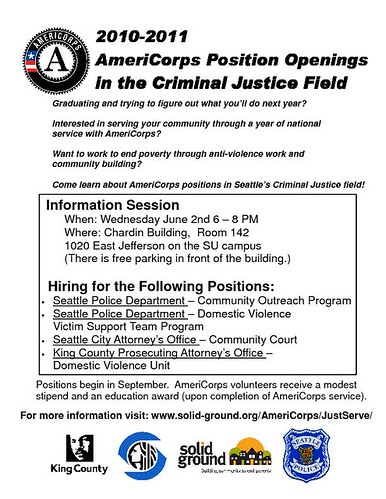
AmeriCorps Position Openings in the Criminal Justice Field

Graduating and trying to figure out what you’ll do next year?

Interested in serving your community through a year of national
service with AmeriCorps?

 Want to work to end poverty through anti-violence work and
community building?

Come learn about AmeriCorps positions in Seattle’s Criminal Justice field!

Information Session
When: Wednesday June 2nd 6 – 8 PM

Where: Seattle University Campus- Chardin Building,  Room 142

1020 East Jefferson (11th and Jefferson)

(There is free parking in front of the building.)

Hiring for the Following Positions: 

  • Seattle Police Department – Community Outreach Program
  • Seattle Police Department – Domestic Violence
    Victim Support Team Program
  • Seattle City Attorney’s Office – Community Court
  • King County Prosecuting Attorney’s Office –
    Domestic Violence Unit

Craft Workshops

What kind of workshops would you like to see being offered?

We are workign to bring fun, rare, workshops to the Capital hill/Central Area (21st and E. Union) to be exact.

We are offering workshops this summer for crafts and topics such as:

Hula Hoop Making

Fingerless Glove Making

Egg Roll/Lumpia rolling (for vegans and/meat eaters)

Hair Flower Making

Earring Making

Jewelry Basics

Graffiti Basics, and a Free wall on site lesson

Old t-shirt revamping

Embossing

Check out out website for more info

www.melleuxyeleux.com

Click on the Workshops page for more info or if you would like to suggest or teach a workshop!

What workshops would you all like us to offer?

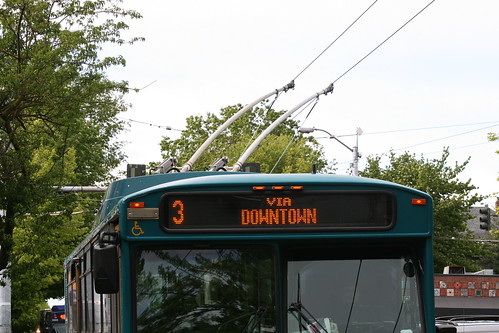
Politics key in trolley bus decision-How the city can help

The final decision on whether or not to keep the trolley buses will be made by the King County Council. And whether or not electric buses will save the county money over the long term, there’s a cold political reality to the county council’s decision: Out of nine county council members, only two have any trolley buses in their districts. 

That fact could easily open up the trolley decision to the long-standing divide between Seattle and the surrounding regional government. Perceived equities in Metro funding has always been a key part of that, which resulted in the infamous 80/20 rule that devotes 80% of new transit hours to the suburbs, even when multiple Seattle bus routes run at standing-room-only conditions.

On the other side, everyone in Seattle city government who has spoken out on the trolley bus issue has been in support of keeping them. So with a potential city/county divide on the issue, the question becomes: what could the city offer to keep the trolley buses around.

As we discussed last month, the trolley bus network runs on cheap hydropower from Seattle City Light. Metro is a big customer for city power. Each day the electric buses use the equivalent of hundres of houses worth of electricity.

The county currently doesn’t get a break on those power costs, paying the standard commercial rate of about six cents per kilowatt hour. Other large commercial users, such as the Nucor steel mill, do pay lower rates. However, in those cases the rate is usually for off-peak hours when the utility has energy to spare, an option that’s not feasible for a transit system that runs 20 hours a day.

But it’s conceivable that the city could decide that the environmental benefits of electric buses are worth a subsidy on that power cost. A 30% cut in electric rates would save the county about $5 million dollars over the next 20 years.  However, that’s just 11% of the $44 million cost of new trolley buses when the existing fleet wears out.

The bigger cost driver of trolley buses is the maintenance of the network of overhead wires. The county maintains a crew of linesmen that are always on hand to fix breaks, do routine maintenance, and to relocate wire when needed due to construction projects or other factors. 

However, that’s an area that the city could conceivably help out with too. Seattle City Light already has a big crew of linemen that build and maintain the network of wires that deliver power to customers all over the region.  That could allow the city to take over trolley bus line maintenance and save the county a hundred million dollars over the next 20 years – more than enough to make up any gap between the county budget and the cost of new trolleys.

The question would be how much it would cost the city to take that over. It’s reasonable to think that the city could do it for much less than the county, given the city’s existing efficiency of scale and expertise in electrical distribution. And it may be possible to fashion a compromise where the county pays the city some additional rate to cover the cost of the infrastructure work, while still saving enough to make the trolley buses a smart financial move.

Given the realities of the county’s budget problems and politics, a win/win compromise may be the best way to keep quiet, non-polluting electric buses running in the city.