Pratt Fine Arts Center’s holiday art sale starts this weekend

image001The annual Holiday Arts Sale hosted by the Pratt Fine Arts Center starts Saturday, with an Opening Night First Dibs Party taking place tonight. Tickets are on sale for the opening party via Brown Paper Tickets.

The sale runs every day except Thanksgiving, until November 30, from 11am to 7pm. Other than the opening night, the sale is free to attend.

The sale includes a range of items. According to the Pratt website:

Enjoy an exceptional selection of art and unique gifts including handmade glass, sculpture, jewelry, paintings, prints, ornaments and other functional objects — all made by local artists. A portion of the proceeds will benefit Pratt Fine Arts Center, the most dynamic year-round, multidisciplinary arts center in the Pacific Northwest!

For more info, visit the event website.

Leschi Elementary Open House This Weekend

Two events coming up at Leschi elementary.  The Open House really is for any community member to stop by see the school and meet the administration.  The daytime tour will give families an opportunity to find out more about the outstanding Contemporary and Montessori programs, excellent teachers and staff, and exciting before/after school activities.  Join us on the following dates:


OPEN HOUSE

Saturday, November 23rd 10:00 am – 11:00 am

Come and have coffee with the school administration. See our beautiful facility and learn about the great things happening at Leschi!


FALL TOUR 

Wednesday, December 4th  9:00 am – 10: 00 am

See classrooms in action and hear from staff and a parent guide all about Leschi Elementary. Check in at the library.  Please contact the main office at (206) 252-2950 to reserve a spot.

Leschi Elementary is located at 135 32nd Ave.

We will be hosting more tours during open enrollment in February 2014. Visit our website www.leschischool.com early next year for dates and times.  For more information contact Pam Johnson, PTA Family Outreach Coordinator, [email protected], 206-755-4309


Samarya Center raising money for new yoga school

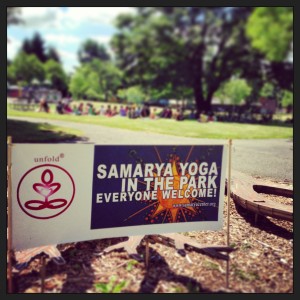
Long-time Central District resident Samarya Center looks to raise $50,000 to build a new facility for its yoga classes. The center has been located at 18th and Yesler since 2001, but its building was recently sold. Samarya Center will need to relocate at the end of this year in order to continue providing community yoga classes, including the popular Yoga in the Park summer series.

Wanting to stay in the Central District, Samarya has found a new space for its yoga classes at 17th and Jackson, above Cheeky Cafe. But in order to build out the space, they’ll need to raise $50,000. The nonprofit is using the fundraising platform Indiegogo to raise funds, and as of this writing they’ve nearly cleared $18,000.

According to the Indiegogo site, Samarya will use the money to “support our move, construction/build-out of our new school, and to provide a solid financial foundation from which to grow and have the capacity to serve even more people both in our direct service or community gathering, yoga classes and therapy, as well as to train dedicated students to carry out these teachings within the greater world communities.”

More details on the fundraiser:

If we are able to raise over $50,000, we will also be able to build up our reserves to allow even more flexibility for scholarship and no cost classes and trainings. We will be able to offer Integrated Movement Therapy to even more people in need who may not be able to afford it. We will be able to bring even more people with diverse life experiences on to our Samarya Yoga Teacher Training. And we will be able to invite more members of our local community to participate in our classes at reduced rates.

We will also be able to uplift and support our dedicated volunteers who offer their love and support to folks in our end of life care programs, our programs for homeless youth, and our programs for veterans, among others.

Since the Samarya Center is a 501c3 nonprofit, all contributions to their campaign are tax deductible. To donate, click here.


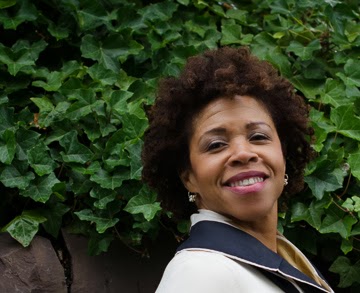
The People of the Central Area: Michelle Purnell-Hepburn, VP / Controller

This post is part of a series of profiles of Central District residents, part of the “People of the Central Area” project developed and written by Madeline Crowley.

Photo by Madeline Crowley

Photo by Madeline Crowley

About Michelle:
Michelle Purnell-Hepburn has spent her life in financial institutions, literally learning at her father’s knee, then working at the Liberty Bank when young. The Liberty Bank was the first African-American owned bank at that time west of the Mississippi. It is an important part of Central Area history.

Your parents contributed to an important part of Central Area history, they were part of the Liberty Bank.

Well, the Liberty Bank of Seattle was a dream of my father. He wanted African-Americans to have the ability to create their own destiny.Liberty Bank, though, was really an off-shoot of an existing financial institution already in the Central Area called Sentinel Credit Union. This was much like Salal Credit Union but much smaller. That had began I believe in late 1940s, maybe the 50s, and the original membership were the Masons.

These were the Prince Hall Masons who met in the Central Area just off of Cherry Street. So on the corner was the “Facts Newspaper,” Fitzgerald Beaver was the proprietor there. One block east was the Masonic Hall, which I believe is condos now, across the street was the (then PhyllisWheatley) YWCA.

That corner of the Central District was where the Sentinel Credit Credit Union started. I started working there when I was very small, embossing and stamping pamphlets. There was a stamp and you had to be very precise with it. I got my start there. I have to admit that my father and his Masonic brothers, their dreams were bigger than a Credit Union. They wanted a financial institution. A bank.

My father, my mother and seven to eight other community leaders founded the Liberty Bank. The initial meetings, the gathering of signatures and the issuing of and the tracking of stock, that was all done in our basement.

The Charter was applied for more than once and was denied. Eventually, the Charter it was approved and the Bank opened in late May 1960.

Can you explain what the situation was for the African-American community without having their own bank? What did that mean for the average person?  

For the average person that meant you had to go to the big banks, the SeaFirst Bank or the People’s Bank or Seattle Trust. Then, you basically had to prove your worth, to prove that you had collateral. To prove that you maintained your home, and show that you had a business plan. I’m using terms that are used now that weren’t used then.

What happened to those who were not able to access banking services?

Without access to banking services you are forced to operate by the cash on hand in order to run your entire business. Or you’re finding credit through loan sharking which is charging you a ridiculous rate.

To read the rest of the story, click here.

Police make arrests, clear Horace Mann

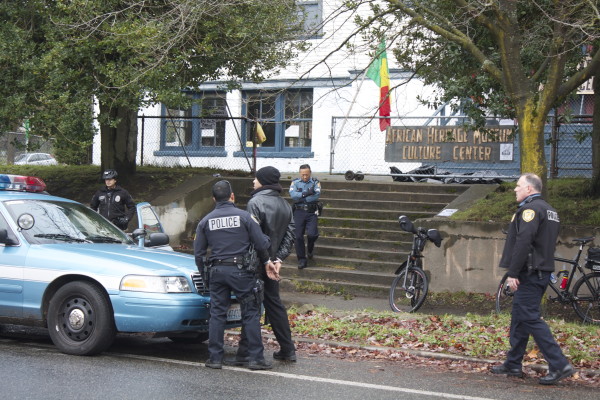
Police arrest a fourth man during Tuesday's raid

Police arrest a fourth man during Tuesday’s raid
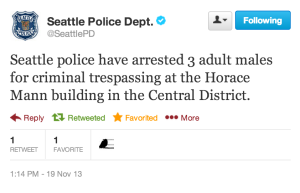
Screen Shot 2013-11-19 at 1.15.01 PMSeattle Police say they have made arrests and are searching the building as groups occupying the Horace Mann school are being cleared from the Seattle Public Schools property on E Cherry near 23rd.

SPD says that three four adult males were arrested as police continue to search the building after entering the barricaded facility Tuesday afternoon.

UPDATE: Police say Tuesday’s raid began around 1 PM and has been in planning for “a while” as SPD had heard threats of a sniper and explosives at the barricaded facility. An SPD spokesperson said the SWAT raid was planned for a time when intelligence gathered by the department indicated there would be no children at the site. SPD says only four men were found in the building in the raid — three were arrested immediately and a fourth was found after about 30 minutes of searching, hiding in an attic space. All four will likely be cited for criminal trespass. SPD said its arson and bomb squad was searching the building for any weapons or explosives.
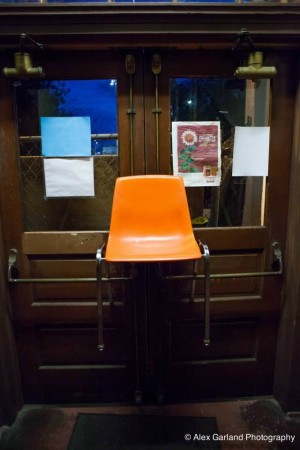
A scene from inside the building earlier this  month (Image: Alex Garland with permission)

A scene from inside the building earlier this month (Image: Alex Garland with permission)

The arrests come after months of talks between the school district and groups occupying the building dragged on. Schools has sent the Africa Town and More for Mann groups multiple letters notifying them they would need to clear the building to make way for planned renovations so the school can re-open next fall. The groups continued to occupy the building despite those demands.

“We want to continue to show the unified community of African-American parents, educators and students working together to take responsibility for the education of our children,” the More for Mann group said in a statement earlier this year. “Now is the time to rectify the past inequities and ineffective methods to educate our children.”

UPDATE x2Wyking Garrett, founding director of the Umoja Peace Center and a member of the Africa Town Center for Education and Innovation, said an Africa Town task force that had been formed to work with schools last talked to the district at a presentation at the last school board meeting and that the Mann groups did not know this was going to happen today.

“We were all shocked and surprised,” Garrett said.

Garrett said that talk of a gun in the school was a “distraction.” “It’s a tragedy,” he said of the way things ending up unfolding.

Garrett said the More for Mann movement isn’t over. “We’re going to continue to say the same things,” he said.

“They talk about parent engagement, this is parent led movement.”

Garrett said the group will continue to push to use the building.

“We’re still committed to honoring the legacy of African Americans in that building,” Garrett said. “It’s an ideal location. Of course the community is going to move forward.”

Garrett said the larger issues behind the Africa Town effort are far from over saying the real issue is black students of in Seattle schools are being excluded from the curriculum and funding they deserve.

“The issues did not go away today, the police can not make those issues go away,” Garrett said.

Here is the SPD report on the incident:

Police Arrest Three At Horace Mann School Building

Written by  on 

At the request of the Seattle Public Schools, Seattle police entered the Horace Mann school building in the Central District Tuesday and arrested three people for criminal trespassing.

School district officials requested police assistance after several groups began using the vacant school without authorization from the district, delaying planned renovations of Horace Mann and costing the school district tens of thousands of dollars in construction penalties.

School district officials began negotiations with the group in an attempt to come to a peaceful resolution, while also working with Seattle police and the City Attorney’s office to determine of

While the school district was able to negotiate with the majority of the group’s members, a small contingent remained inside the Horace Mann building and refused to leave. Members of the smaller group claimed to be in possession of explosives, and warned that anyone who approached the building could come under fire from a rooftop sniper.

After working with school district officials and monitoring the situation at Horace Mann for weeks, Seattle police learned that only a few members of the group would be inside the building today.

As this smaller group presented a lower risk for an arrest team, police requested that nearby Garfield High School go into shelter-in-place, and stationed additional uniformed officers on the school’s campus shortly after 12:30 PM. An SPD tactical team then entered the Horace Mann building, where officers arrested three people for criminal trespassing without incident.

As of 1:15 pm, police were still searching the building for other trespassers.

Police will continue to work with the school district to secure the school site.

Central Cinema installs new projector post Kickstarter

After far surpassing their Kickstarter fundraising goal and bringing in a whopping $69,084,

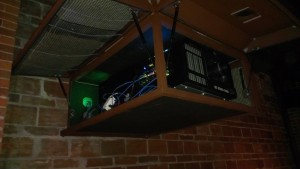
Central Cinema's new bling (photo from Kevin Spitzer)

Central Cinema’s new bling (photo from Kevin Spitzer)

Central Cinema has been busy making upgrades to its projector system.

The theater’s goal was to pull in $60,000 to upgrade to a Digital Cinema Package (DCP) projection system. By 2014, all major movies will be made for DCP projectors, so theaters around the country are being forced to upgrade. As a result of the successful drive, Central Cinema has installed the projector and the related infrastructure like cables, sound baffling, and electronics.

Co-owner Kevin Spitzer spent time at the Pratt Fine Arts Center’s metal shop creating projector’s housing, now suspended at the back of the theater.

Though Spitzer says they hit a few snags trying to get the picture and sound to run smoothly, Central Cinema is now showing movies in the new digital format, including the currently-running Die Hard flick.


Trailer released for movie filmed in part at Garfield High School

Phoenix Rising Motion Pictures recently released a trailer for its film One Square Mile, which was filmed throughout Seattle — including at Garfield High School. We haven’t been able to find a date for the movie’s release, but the film’s IMDB page says 2013.

You’ll recognize several locations throughout Seattle, including the Fishermen’s Terminal and the Ballard Locks  Here’s the trailer:

A blog entry from the Washington Filmworks Blog last September has more info:

Washington Filmworks’ production incentive project One Square Mile, starring Kelly Blatz (Prom Night), Academy-Award® nominee Richard Jenkins (The Visitor, Burn After Reading) and Academy-Award® winner Kim Basinger (L.A. Confidential, 8 Mile) just wrapped principal photography in Seattle this past week.  The feature film was written by Josh Campbell and Jeff Van Wie and directed by award-winner Charles-Olivier Michaud (Snow and Ashes, 2010 Slamdance Film Festival Grand Prize).  The film shot for 25 days at locations throughout Seattle such as Fishermen’s Terminal, the Ballard Locks, Rainier Beach and Garfield High School.


Synopsis – On the threshold of young adulthood, Drew (Kelly Blatz) is torn between the dreams of his youth and the all-too-real existence of his marginalized family life.  Across the street, his older neighbor, Coleman (Richard Jenkins), is a broken man haunted by the past and struggling to finish his life with any kind of meaning he can muster.  The promise of Drew’s athletic abilities captivate Coleman, reigniting a drive for excellence long lost to the old man.


Read more about the film here.

What exactly will the 23rd Ave greenway be? It’s up to you

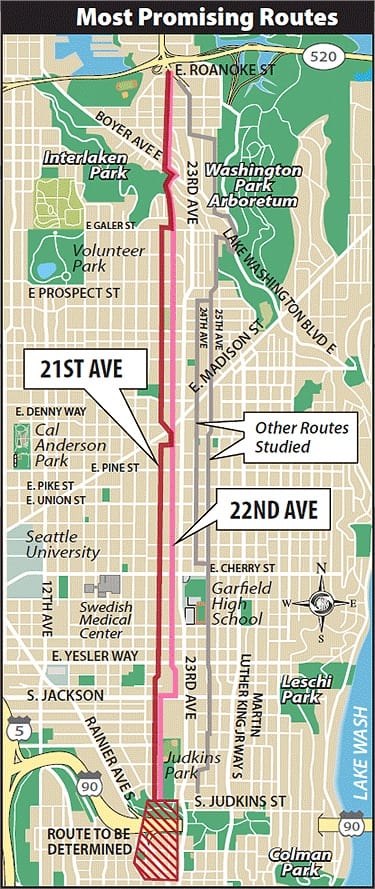
23rdGreen_map1


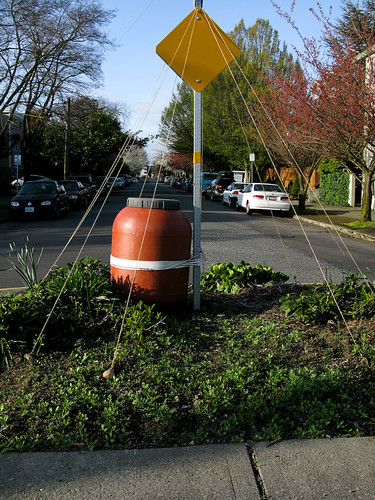
Traffic Circle Garden, originally uploaded by prima seadiva.

The 23rd Ave corridor is arguably the most neglected transit corridor east of I-5. For years the Seattle Department of Transportation has recognized the need for street and pedestrian improvements. Now it’s finally happening through two concurrent projects: a $46 million overhaul of 23rd Avenue and a greenway slated to run parallel to 23rd one or two blocks away.

Details of both projects are getting hammered out now, including how each can move forward without running into each other’s path. At a well-attended and — at times — testy November 6th meeting to gather public input on the greenway, much of the discussion turned towards the 23rd Ave corridor project.

Some people in the session ended up pretty damn angry about the whole thing. Continue reading

Finding Your Way Through Aging, by Rob Liebreich of Aegis on Madison

Aegis-on-Madison-LogoEvery day in the US an estimated 10,000 individuals turn 65 years of age, leading to family conversations that include an array of new terms.  Below is a list of five terms you should know to face the new realities of a rapidly maturing society:
  • Aging in Place.  Many, if given the choice, would choose to stay in their own home.  Making modifications to an existing home often include fall prevention measures such as grab bars in the bathroom; support for getting up and down stairs such as ramps; bringing in support to handle home maintenance, and care services that may cost on average $20-30 dollars an hour depending on experience, licensing, and insurance.
  • Continuing Care Retirement Communities (CCRC).  This type of community offers multiple levels of services including independent living options.  Some Seattle-based CCRCs are rental based, while most require a “buy-in” where a portion is returned at a later date or the full amount of the “buy-in” amortizes over time.  A “buy-in” can range from $30,000 to over $1 million. CCRCs may or may not offer services also described below.
  • Assisted Living.  This type of community is built on the positive premise of socialization and individualized care support in a more residential setting.  Services benefit those who need support with activities of daily living (ADLs) which include dressing, bathing, eating, toileting, and transitioning from place to place; medication management often is included.
  • Memory Care. This is a community or part of a community built to provide a secure environment for those with dementia and other cognitive challenges.  The community should provide a stimulating, engaging experience that respects where a resident is in their cognitive progression.
  • Nursing Home.  This is a place where convalescent and/or chronic care with nurse involvement and oversight is available for patients who are unable to properly care for themselves.  This type of facility is often used for those with rehabilitation needs following a hospital stay or by those facing complex disease challenges.
  • Adult Family Home (AFH).  This is a residential home licensed to provide personal care focused on ADLs for up to six non-related individuals.  Though it provides fewer amenities and resources than an assisted living community, an AFH often provides its services at a lower price.


For additional information, please consult  www.AegisonMadison.com.

Health Insurance Help Comes to You

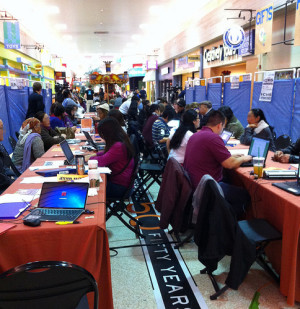
10413041014_52d19e843eFor those enrolled in the state-run health insurance plans, coverage begins January 1. Thousands of eligible King County residents still haven’t signed up – are you one of them?

If you’ve been putting enrollment off because it’s too overwhelming, help is near. More than 600 expert “in-person assisters” are traveling around the county, helping folks sign up face-to-face.

Want to know when they’ll be in your neck of the woods? Text KING plus your ZIP code to 468311. You’ll receive regular updates about opportunities to get one-on-one help near you.

Already signed up? Tell your friends! Enrollment can be confusing, but there’s plenty of help available.