UPDATED: Woman attacked last night in Central District apartment

Details from the Seattle Police Department blotter:

Seattle police are looking for a man who attacked a woman in her Central District apartment Monday evening.

At about 8:15 pm, the woman was cooking inside her home in the 700 block 26th Ave, when she heard a knock at the door.

When her young son ran to the door and unlocked the deadbolt, a man began trying to force his way inside the home.

The suspect broke a second lock on the door, burst inside the home, and grabbed the woman.

The woman was able to wrestle herself away from the man, grab her son, and run to a neighbor’s house, where she called 911.

During the incident, another woman walked by the victim’s home, heard the commotion inside, approached the door and asked what was going on. The suspect told the witness it “was an accident” before he fled.

Officers recovered several pieces of evidence at the scene, including clothing and other items.

The victim told officers the suspect was a hispanic or middle eastern man in his 20s to 30s, tall, with a slim build and light facial hair.

The victim sustained a minor injury to her wrist during the incident and was taken to Harborview for treatment.

UPDATE: The woman told Kiro 7 that she plans to move, as she no longer feels safe in her home. Police have not caught her attacker.

Socially Responsible Development Questionnaire – City Council and Mayoral Candidates Respond

Over the summer, we began working with a small, diverse group of both for-profit and non-profit housing developers and citizens, all with an interest in promoting socially responsible development toward Seattle’s future built form. The Harrell, McGinn, Murray, and Steinbrueck campaigns all responded with detailed responses to our questionnaire.

After the primary election, we submitted the same questions to the candidates for City Council. We are happy to say that we have received responses from all but one campaign. The Conlin, Sawant, Bagshaw, Bellomio, Licata, O’Brien, and Shen campaigns all responded to our questions.

As the responses cannot be succinctly summarized—and with 7 different responses to 5 essay questions—below is not so much a summary as an excerpt from each full response:

Richard Conlin views the most “salient” issue regarding socially responsible development (SRD) to be the work of integrating affordable housing and transportation choices in a way that is accessible to all. His challenger, Kshama Sawant, acknowledges that Seattle has reason to tout its green credentials, but writes that these improvements are often at the expense of already marginalized communities. Sally Bagshaw hopes to advance SRD by requiring affordable units in market rate apartments, while Sam Bellomio advocates strengthening citizen engagement. Mike O’Brien, in his response, highlights his success in securing funds for a cultural center in Little Saigon as part of the Yesler Terrace Re-Development, as a way to prevent displacement and retain the neighborhood character.

Potential negative outcomes of growth, for Albert Shen, include inadequate public transit relative to the city’s growth, in particular to underserved communities—for example, the lack of a Graham Street LINK station. Kshama Sawant sees gentrification as a negative outcome of growth and development, and proposes freezing rents and enacting rent control as remedies. While Richard Conlin, after explaining the nature of Seattle’s boom-bust cycles, asserts that people in Seattle do not fear change, but rather loss. According to Sally Bagshaw, this is caused by rapid growth—and to Nick Licata this rapid growth tends to exacerbate already existing discrepancies in wealth.

Nick Licata asserts that the “Seattle process” can make the city reactive, when it should be responsive—essentially always “one (economic) boom behind.” However, the he goes on to say that as a model of community engagement, Seattle has set an international example. Mike O’Brien sees the “Seattle process” as an opportunity to fully examine a development’s merits, but that the lengthy review can increase costs that ultimately get passed on higher housing costs. Both Albert Shen and Kshama Sawant indicated that the process can cause delays to the supply of affordable housing, and both draw the connection between the delay in affordable housing and an inadequate public transportation system. Kshama Sawant proposes that while the “Seattle process” has somewhat democratized the process, monied influence still holds undue sway. Richard Conlin values the democratic principles behind the process, but sees it fall apart at times when it is an endless loop, and in the worst case the views ultimately taken into account are simply the last ones standing. He laments that the current land use code is often too focused on things we do not want to see happen, rather than promote opportunities for the things we would like to see happen.

In regards to building typologies and parking, Sally Bagshaw recognizes people’s desire to preserve single family neighborhoods, but states that 100,000 new neighbors are expected within city limits within the next 10 years. She has been impressed by some of the density solutions advocated by Seattle-based Sightline Institute’s Founder and Executive Director, Alan Durning, in his book Unlocking Home. These include, for example, easing parking and owner occupancy restrictions for (modest) detached and attached accessory dwelling units. Sam Bellomio states that the future typologies will be decided by the impacted neighborhoods. Nearly all candidates expressed the very critical need for improved public transportation to accompany any new growth in the city or any change to the building typologies as issues of both efficiency, sustainability, and equity.

All the candidates who responded express a desire for a range of affordability across all neighborhoods. Mike O’Brien sees the need for a multi-faceted approach that includes strengthening the incentive program in the SLU rezone to a variety of housing types, including micro-housing. Albert Shen states that his 8 years with the Seattle Chinatown International District Preservation and Development Authority (SCIDpda), a non-profit housing provider and community development agency, gives him direct experience in working with the affordable housing community. Kshama Sawant sees raising wages, controlling rents, and taking advantage of currently vacant and underutilized buildings as steps to take before increasing supply. Richard Conlin sees the greatest need for people who earn 30-50% of area median income (AMI), especially as the Federal government reduces its commitment, and sees the Housing Levy as a key tool for this. Nick Licata states that preservation of existing housing is a key to affordability as well, and that the creation of the City’s rental housing inspection program, which he spearheaded, will promote stronger maintenance practices and will help prevent some properties from reaching such a state of disrepair that they are vulnerable to redevelopment.

Garfield High students caught in Arboretum hazing incident

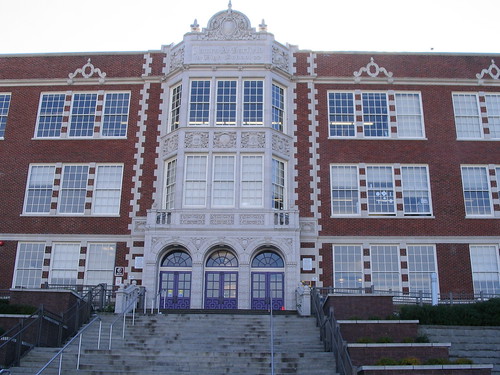
A hazing incident in the Arboretum late Friday afternoon involved more than 100 Garfield High School students. The students were hitting each other with paddles, throwing eggs, drinking alcohol, and were covered in shoe polish and wearing diapers.

Garfield High Principal Ted Howard arrived on the scene with the school’s community police officer after receiving a report of the incident. When he approached, students shouted derogatory names at him, including the N-Word.

Principal Howard wrote an email to Garfield parents on Friday night describing what happened:

An Important Message from Principal Howard…


Do you know where your son or daughter is at tonight?  I spent the afternoon with Officer Radford and many other officers walking through the Arboretum.  One hundred or more Garfield students were participating in hazing incidents, drinking hard alcohol and beer.  Students were being paddled, had on diapers, eggs were being thrown at students and shoe polish was all over their body.  As students ran and scattered from the scene they caused  at least one,  maybe more car accidents due to running in front of cars.  I was also called a “Nigger” by a student and many other derogatory names.


As I email you tonight I asked the question do you know where your son or daughter is at? I ask that question because I want you to know that we all have a responsibility to keep our kids safe.  We all work hard to make sure they learn life lessons and make better decisions.   Tonight some of our students didn’t make good decisions.  If students were there to watch,  cause harm to another student or behave inappropriately this impacts the entire GHS community and puts the GHS community in a negative light.


I am asked every year how we will address hazing.  Every year we work really hard to teach our students about respect, how to honor each other’s cultures, and to have empathy.  I am asking you tonight to continue that conversation with your son or daughter.  We are a community, a community that grows together and learns together.  Please have a conversation with your son and daughter about decisions, how they can and will impact people’s lives.


Thank you for your time.


Ted Howard

Principal Garfield HS

The district responded with the following message regarding hazing:

  • We have zero tolerance for bullying, hazing and intimidation, and we take it very seriously.
  • We are continuing to investigate this incident.
  • We are in the process of determining what type of disciplinary action is warranted for those students who were involved.

Seattle police responded to the incident Friday but have not made any arrests.

Seattle Public Schools spokesperson Teresa Wippel told KPLU that “Garfield has had a history of this hazing, and it’s something that’s been going on for many years. It’s kind of a tradition,” she said. “The principal has been working hard to rectify to get students to stop doing it, but it has been something that’s been going on for a while.” KPLU also noted that in a school newsletter last year, a parent wrote that upperclassmen tend to haze younger students twice a year, around Homecoming and Spring Spirit Week.

Meany Middle School Survey

With the reopening of Meany Middle School on the horizon many community members are concerned about Seattle Public School’s proposal to roll-out the middle school grade by grade at the Old Van Asselt building (See Map). There is a sense that this would get Meany off to a bad start since many parents will opt for alternative middle school pathways or private school options rather than bus their kids to school 30 – 60 minutes each way.

Please take this non-scientific poll about the reopening of Meany Middle School: http://www.surveymonkey.com/s/BXD92GJ

The poll should take less than 2 minutes to complete. The poll assumes Meany will eventually be reopened. The goal of the survey is to gather more information about the community’s commitment and concerns regarding Meany. We want to ensure that if Meany reopens it truly becomes a dynamic, diverse, and desired neighborhood middle school.

Comments on CDN stories

Is it necessary to include comments to CHS stories on the CDN comment listing?  Some people may like them – perhaps we need a conversation – but since there are only five shown at a time, adding the CHS comments reduces the number of CDN comments visible and makes it more difficult, for me, at least, to keep up with the current ones.  Anyone else have thoughts on this?

Pratt Fine Arts Center hopes to expand with arts-based community

The Central District‘s Pratt Fine Arts Center is gathering proposals for the creation of an arts-based community, with a mixture of housing, studios, office space, and gathering space. This “arts district” will transform the center’s property between South Main and Jackson streets and 19th and 20th avenues south.

The exact make-up of the district and the timeline for the build out will be largely left up to the developer chosen through the proposal process. Proposals are due October 11.

Image by Alec Miller. (Left to right) Glass Artist Kelly O’Dell blows an Ammonite, assisted by Patricia Davidson, Lydia Boss, and Raven Skyriver at the Pratt Open House, “One Hot Night,” Sept 7, 2013

Image by Alec Miller. (Left to right) Glass Artist Kelly O’Dell blows an Ammonite, assisted by Patricia Davidson, Lydia Boss, and Raven Skyriver at the Pratt Open House, “One Hot Night,” Sept 7, 2013

Currently, Pratt’s offices are crowded into inadequate space, overflowing into classrooms and studios in some places, so part of the impetus for a new development is to relocate the office space. Other parts of the project will help Pratt establish a Jackson Street-facing front office, and perhaps a public cafe and/or other gathering areas where artists can mingle and share work.

“The whole concept is an artists’ hub,” says Pratt Executive Director Steve Galatro. “These spaces will face inward to create synergy among the buildings.” The new development will utilize parts of the property that currently sit empty or house parking, which Galatro envisions moving underground. He says about 120 residents may be housed in the future loft space.

The new development will share the block with one of Pratt’s studio spaces. Here, and in Pratt’s space on S. Main Street abutting Pratt Park, established artists and curious beginners can take classes on glass blowing, jewelry, metals, drawing, painting, printmaking, and more. The nonprofit welcomes around 20,000 visitors a year to its classes, exhibitions, and open houses.

Pratt is working with real estate advisory firm Heartland, LLC, to oversee the development. The timeline on accepting a proposal and beginning construction is very open, but Galatro emphasized the nonprofit wants to move things along as quickly as possible.

The announcement of Pratt’s new project comes on the heels of another potential development along the Jackson Street corridor. Developer Isola Capitol proposes building 160-unit Atlantic Flats at 1801 S. Jackson Street, and the area is poised for further projects.

“It’s a viable retail corridor, with the population density going up,” says Galatro. “Pratt is at the heart of it all.”

CD brewers show off homemade beers; Standard gets a patio covering

If you value this coverage and want to support the continued independence of Central District News, please subscribe today for as little as $5/month — DRIVE ENDS TODAY.

A gaggle of judges and home brewers packed into Standard Brewing on Saturday for a people’s choice competition among members of the Central District Brewing Collective. photo(2)

Judges sampled ten home brews and rated them on their aroma, appearance, flavor, mouthfeel, and overall appeal. The top-rated beer of the day was from Central District resident Chris Prost, whose creation “Simarillion Pale Ale,” made with Simcoe and Amarillo hops, received the highest marks.

“The name [Simarillion] is both a play on the hops used in the beer and an off-hand reference to one of J.R.R. Tolkien’s ‘mythopeic’ works (although spelled slightly differently),”
Prost says. “I brewed the beer as an anniversary gift to my hop-loving wife, Michelle. It’s a golden-hued ale with a biscuit-y malt character and a bold citrus/pine aroma and flavor.” A keg of Simarillion will be on tap at Standard until it runs out.

Second place went to Greg Guzauskas with a Belgian twist on an IPA called Mr. Belevedere, and third place went to Tim Frommer for his Backyard Plum Dubbel.

In other news, Standard’s Justin Gerardy is planning to turn his patio space into a winter beer garden of sorts. Gerardy is waiting on a custom covering to keep you dry until the sun comes out again. He’ll heat the space with a propane heat lamp, too. The set up will be ready any day now.

If you value this coverage and want to support the continued independence of Central District News, please subscribe today for as little as $5/month — DRIVE ENDS TODAY.

Monday Mayoral Forum Cornish Playhouse – formerly Intiman – at Seattle Center.

This Mayoral forum will be moderated by Jim Kelly, Executive Director of 4Culture and cosponsored by Allied Arts and League of Women Voters. While there is a slight arts twist in that they touch on things like historic preservation and arts education, they really focus on key issues for Seattle as a livable city – transportation, public safety, education, and zoning.

Bring friends and neighbors too!  It will be more than worth your while.

The doors open at 6:30 and the program starts at 7:00 p.m.  The event is being held at the Cornish Playhouse – formerly Intiman – at Seattle Center.

Hamlin Robinson School announces location of new home for 2013

HRS-new-location-2015Thousands of students have passed through the doors at TT Minor.   It is indeed, a special place.   All of us at Hamlin Robinson are honored to call TT Minor home.  This location has proven a good step for HRS, our students, their families and the greater Seattle community.  HRS serves students with dyslexia and related language difficulties.

Thanks to the larger space, we have been able to increase enrollment from 106 in 2009 to a projected 190 in 2013-14.  We have also been able to extend our reach into the community by developing the HRS Learning Center which provides over 200 tutoring sessions each month as well as professional development opportunities for parents, educators and professionals.

However, this was always intended to be a temporary location.   Our five year lease with Seattle Public Schools expires in 2015.

On nearly an acre of land, our new home will be located just behind the Oberto’s retail store on Massachusetts Avenue South.


Neighborhood group organizes to ask SPS to reopen TT Minor

Parents and residents in a northern swatch of the Central District, from Madison Avenue to Cherry Street and from 14th to 23rd Avenues (called Areas 42 and 43) are hoping to influence the school district to reopen TT Minor as the area’s elementary school.

The group’s impetus for forming is a recent projection that Stevens Elementary School will surpass its current capacity for students in the next several years. As a result, Seattle Public Schools has proposed boundary changes that will reassign students near Stevens’ southern boundary to either Madrona K-8 or Lowell Elementary. The group would prefer the district reopen TT Minor.

The school district is fielding feedback on its proposed boundary changes at several upcoming meetings, including one on Monday at Meany Middle School from 6:30 to 8:00 p.m. The neighborhood group will be present at the Monday meeting to express their thoughts on TT Minor.

The group outlined its goals in a recent media release sent to Central District News:

Our short-term request is to maintain the current boundaries in order to provide stability to the families of Area 42 and 43 that have been shuffled around time and time again in the years since the closing of TT Minor Elementary.  Our long-term goal is to reopen TT Minor as a neighborhood elementary school as soon as funding and administrative processes allow.

Utilizing the Seattle Public Schools Guiding Principles as a template, our opinions concerning the matter are as follows:

  • Since the closure of TT Minor Elementary in 2009, there has not been adequate data capturing the current density and growth projections for Area 42 and 43.  We are asking SPS to collect growth and density data for this neighborhood.  Based on our own knowledge of data from 2011 American community survey, Area 42 and 43 encompass two census tracts that together serve nearly 600 families.  Even if every family had only one elementary aged child and then, only two-thirds of families sent their child to a neighborhood elementary school, at least 400 students could be served.  This is more than the current or projected enrollments for Stevens, Montlake, Madrona, or McGilvra.
  • Area 42 and 43 census tracts represent some of the most diverse in Seattle, yet it is one of the only neighborhoods that lacks a walkable neighborhood elementary school.  This is not an equitable application of public resources from a racial, cultural, or socioeconomic perspective.
  • TT Minor provides a safe, walkable elementary school for all of the children of Area 42 and 43.  Travel to Madrona, Lowell, and Stevens requires busing and/or the crossing of multiple large and dangerous intersections. A walkable elementary school is also a key piece of the solution to the childhood obesity epidemic plaguing this country, especially minority children.
  • The principle of minimizing disruptions by aligning new boundaries with old is totally ignored in the case of Area 42 and 43.  There is a long history of boundary changes in this neighborhood that do not allow for any sort of consistency with school assignments among neighbors and sometimes, even within families.  There are cases where on a single block there are 4 families being served by 4 different schools, all of which were assigned, not chosen.  We feel the introduction of a stable neighborhood school would rectify this issue in the long term.  We are located such that we are bound to be moved time and time again as density more near to neighborhood schools like Stevens, Madrona, and Lowell increases.
  • By reopening TT Minor as a neighborhood school, the district will save transportation costs as well as the cost of repurposing a building currently suitable for elementary students for any other proposed use.

We are asking Seattle Public Schools to deeply consider our request based on the needs of Area 42 and 43 as outlined above.  We are devoted parents asking for equitable access to a neighborhood school.  Reopening TT Minor Elementary is a sensible and sustainable long-term strategy. The current proposed growth boundary changes are yet another Band-Aid, short-term fix, ignoring the SPS’s own data and guiding principles.

Central District News plans to further cover the boundary changes as the story evolves.