The success of Seattle’s Africatown Liberty Bank building has now been declared an Historical Preservation. The unanimous nomination decision was decided by the City of Seattle Landmarks Preservation Board Members.

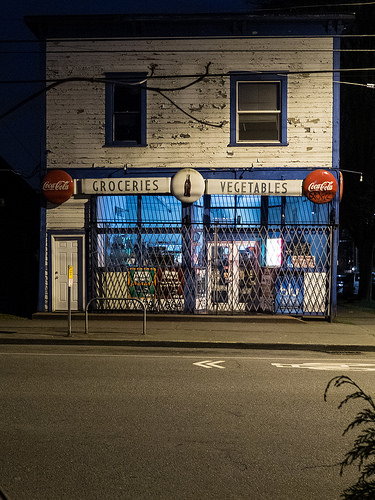
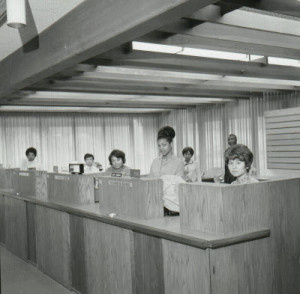
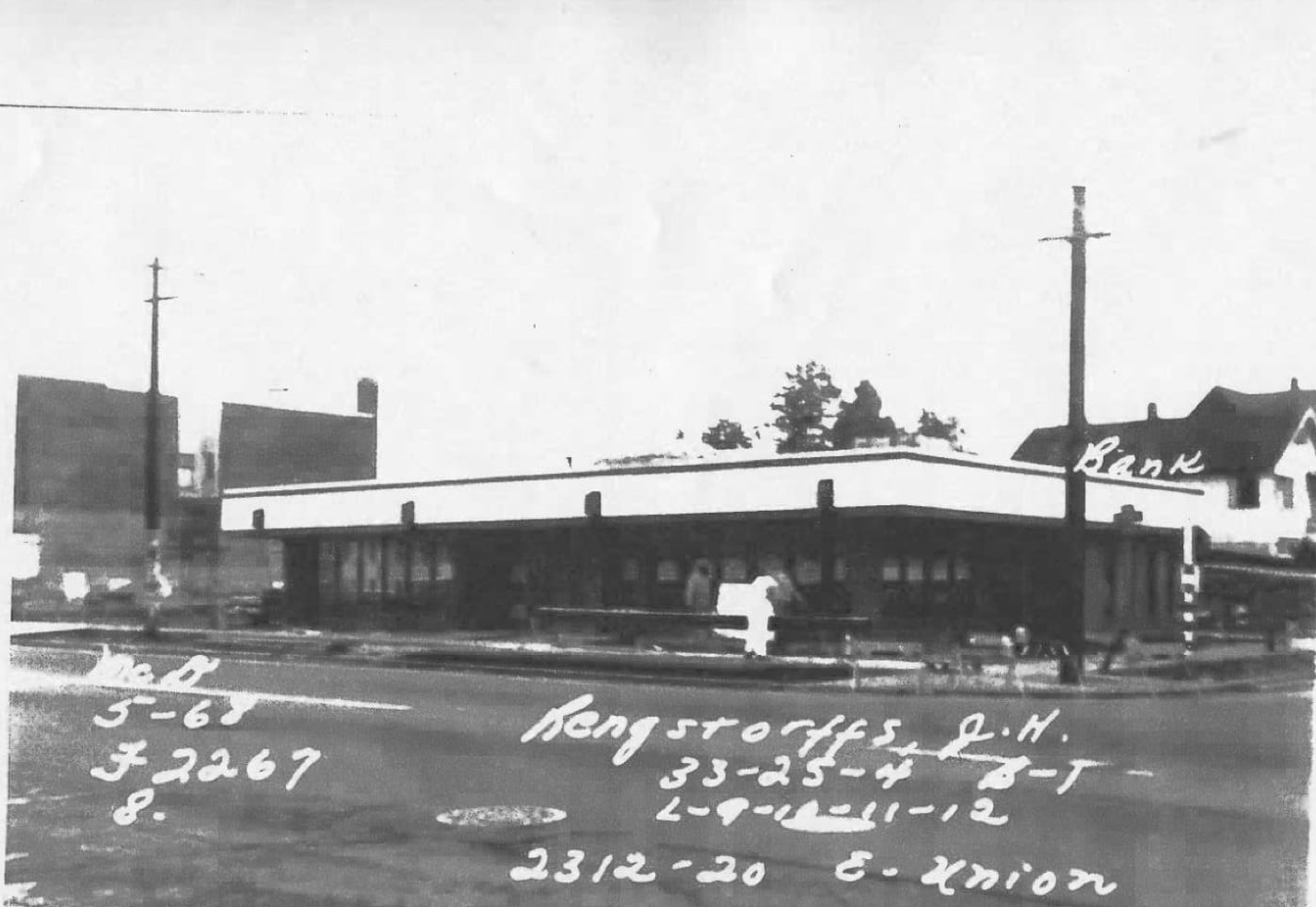
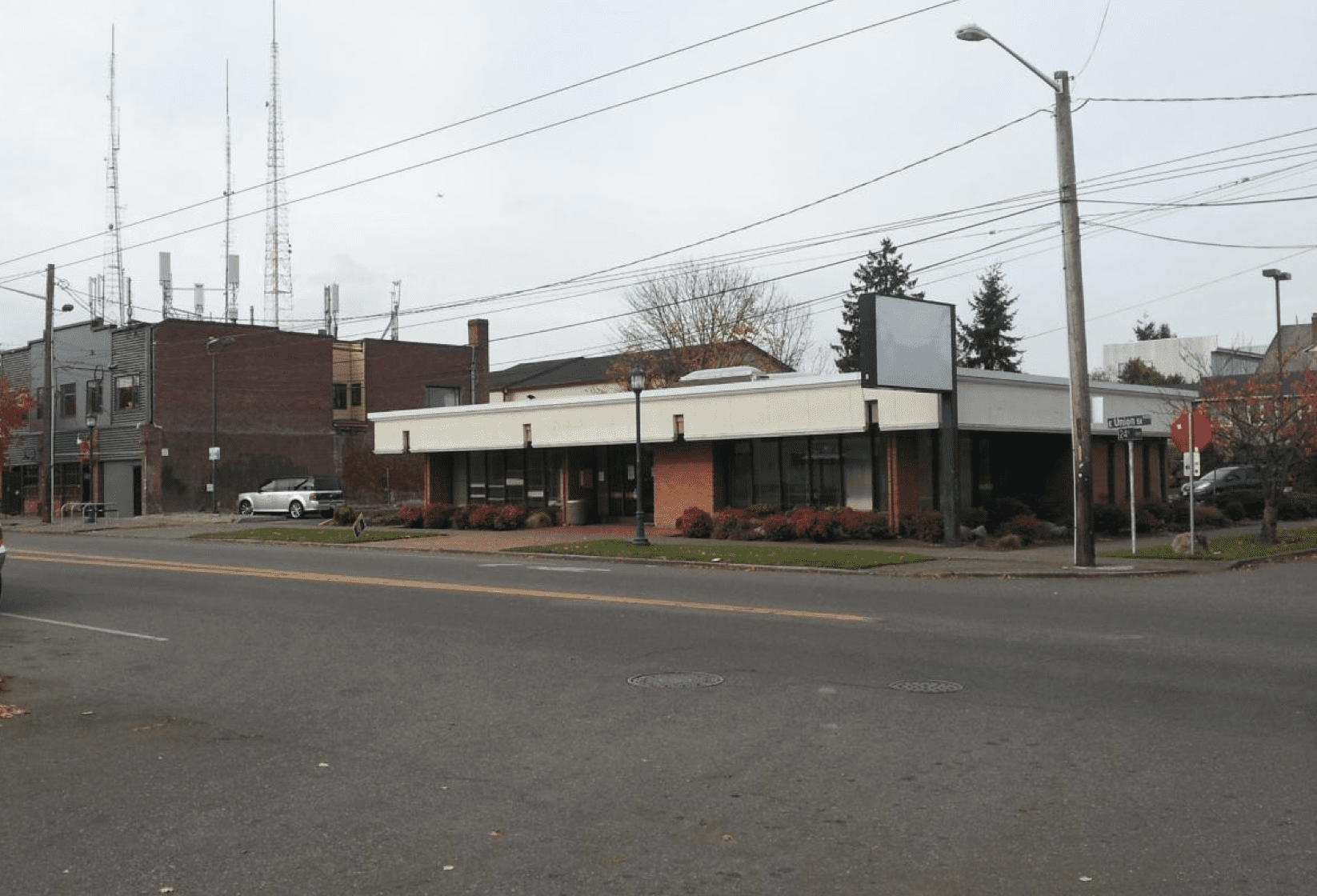
libertybankinterior11The landmarks preservation board meeting was held at the Seattle Municipal Tower on Wednesday February 5 to decide on a nomination as to whether or not the former Liberty Bank site at 2320 East Union Street, should be declared a Historic Preservation. And it was. A true success for Africatown.

Africatown community members Omari Tahir-Garrett, and Leith Kahl spoke before the panel and also presented a slide show. Both also made statements as to why Liberty Bank should become an historic landmark. Others from the central district community also made comments.

The landmarks preservation board members then heard comments and viewed a slide show presented by Capitol Hill Housing representatives.It was reported in the Central District News back on January 16, 2013 that Capitol Hill Housing had entered into an agreement with Key Bank, who had owned the building, and that CHH had planned to purchase the property and convert it into affordable housing.

The Africatown community then submitted information to the City of Seattle landmarks preservation board to consider a nomination for Liberty Bank

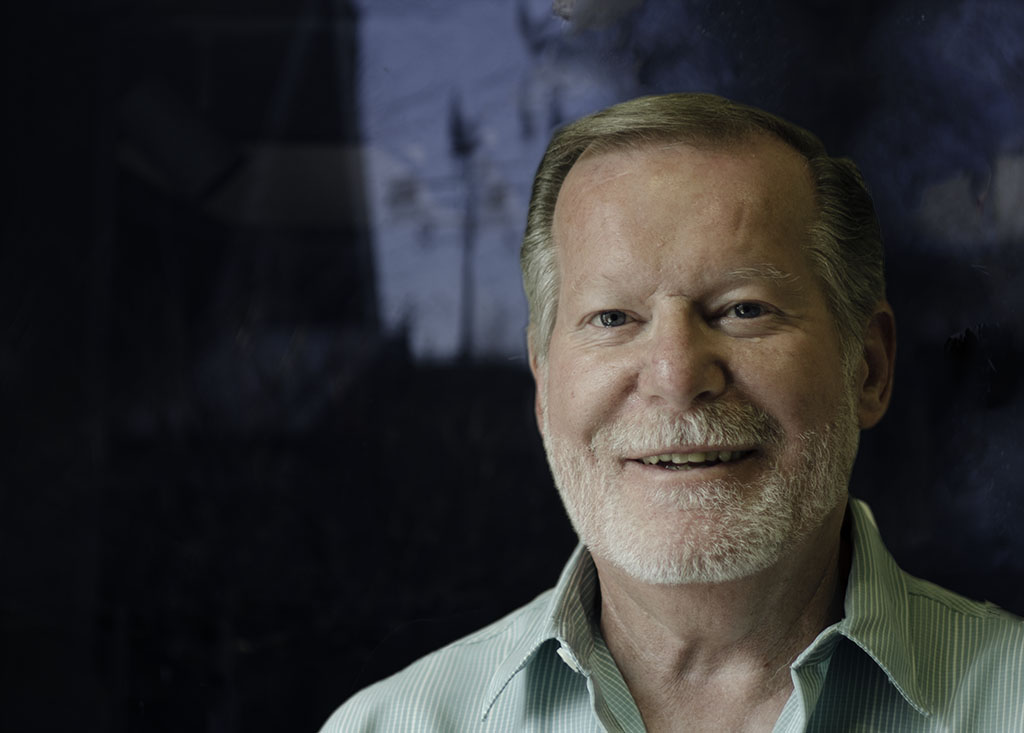
Liberty Bank was founded by James Purnell, who passed away in 2005 at the age of 84. Purnell was once president of the National Bankers Association and was an influential advocate for fairer banking services to minorities.

The building’s architect, Mel Streeter, was a well respected architect in Seattle and among the most prominent African-American architects in city’s history. His work can be seen at the African American Academy and John Muir Elementary School, among other places.

Members of Seattle’s Africatown attended the meeting to continue to advocate and preserve the cultural and historic fabric of the african american central district community, now known as ‘Africatown”.

Historic preservation, economy success, education, and cultural identity all make a substantial contribution to Seattle’s Africatown community.

The success of the nomination was the right thing to do.

It was the only thing to do.

Community. Culture.

Southern Italy Wine Tasting

colosi

It’s a little chilly in Seattle, but picture yourself on the Mediterranean, in Summer with the grape ripening in the sun and the breeze floating in off the sea.  No we can’t send you there right now but on Saturday we can pour a little of it into your glass.  Brave the Arctic blast and come taste some great wines form Campania, Sicily, and Sardinia.

2012 Colosi Bianco Sicillia $10  — Sicily
Inzolia, Catarratto, Grillo
This 24 acre estate in Salina, a small island in the Eolian Archipelago, has volcanic soils ideal for vine cultivation.  Their Bianco has aromas of flowers and vibrant fruit, round and generous fruit flavor and excellent length.

2009 Terredora di Paolo, Lacryma di Christi del Vesuvio, Rosso DOC $15  — Campania
Lacryma Christi
Terredora di Paolo focuses on rediscovering and restoring Campania’s ancient and native varietals such as Lacryma Christi. Legend is that Lucifer when cast from Heaven, desperately grabbed a piece of it with his fingernails as he fell and placed it on earth near the Gulf of Naples. Noticing the loss, the Lord wept, and where each of his tears fell the first vines grew on Earth. Whether or not that is its true origin, the wine has intense fruit aromas of cherry, raspberry, black currant and spicy overtones with hints of minerals and cloves.  The flavor is soft and elegant, with pleasant tones of mature red fruits, plums and hints of tobacco, coffee and ground pepper.

2010 Feudo di Santa Tresa Frappato $15  — Sicily
Lying close to the Mediterranean, Feudo di Santa Tresa’s vineyards benefit from cooling sea breezes.  Frappato is a native Sicilian varietal that has a thin skin and large berries. It is a lively, fruit-forward wine when vinified on its own. The wine has fresh aromas with lots of red berries and delicate sweet spices, a smooth lively acidity, with a spicy, long-lasting after taste.

2011 Nuraghe Crabioni Cannonau  $19 — Sardinia
Nuraghe Crabioni is an 85-acre property is located in Sorso, Sardegna where Cannonau is the local variety of Grenche. The wine has sweet notes of ripe red fruit reminiscent of Maraschino cherries under spirits; lightly spiced persistent aromas; balanced with developed structure and nuanced layers that can be attributed to its rich terroir.

2009 Azienda Agricola COS, Cerasuolo di Vittoria  DOCG $32  — Sicily
Frappato 40%, Nero d’Avola 60%
A group of friends Giambattista Cilia (C), Giusto Occhipinti (O) and Pinuccia Strano (S) began making wine together renting their parents’ lands and harvesting, pressing the grapes, and making innovative wine and their reputations started to grow.  Their Cerasuolo di Vittoria has aromas of dried cherry, chocolate, smoke, herb and  licorice It has dried cherry, truffle and smoky flavors in the mouth and a long finish.

Madrona Wine Merchants offers free wine tastings featuring 4-5 selections on a theme every Saturday from 2 until the bottles run out and on Sunday we offer a mini-tasting of two wines all day from 11-5. No matter what day you stop by we always have something open to sample.

A nickel here, a dime there — City services look for guidance as affordability concerns mount

City Light billboard, 1968 (Image: Item 78729, City Light Photographic Negatives (Record Series 1204-01), Seattle Municipal Archives via Flickr)

City Light billboard, 1968 (Image: Item 78729, City Light Photographic Negatives (Record Series 1204-01), Seattle Municipal Archives via Flickr)

With rates for utility services set to increase, Seattle Public Utilities and Seattle City Light are now seeking public input to help better balance any rise for a city already beset with a rapidly growing cost of living. The City of Seattle is holding a series of public forums designed to inform residents on what utility services SPU currently provides. Last night, the tour visited Garfield Community Center.

According to SPU’s Andy Ryan, the hope is to let the people decide if maintaining their current levels of service is worth the added financial burden.

“We’re going to show people everything we can about what the utility does now, and people will tell us exactly what they think after they’ve seen the whole process,” said Ryan, SPU’s public information officer. “If they have specific ideas, by all means, suggest them. But if people don’t know what we do now, it doesn’t help.”

Forecasts for the increase comes as part of SPU’s work on a six-year business plan that will provide greater transparency for city residents with a baseline estimate of costs. SPU’s results found that unless certain services are reduced, the utility rates for Seattle households would see a 30% increase by 2020, rising approximately $16 per year from $325 in 2015 to $422.

For renters, many buildings simply pass the costs of water and sewer onto tenants in the lease though newer buildings typically put electric bills in the hands of their residents. Meanwhile, “third party billing” regulation in the city protects tenants from monkey business in older buildings where landlords have centralized utility costs that are then doled out for payment by tenants.

SPU says that the main causes behind the rate hike come primarily from inflation, which constitutes 53% of the estimated increase, with the remaining amount being attributed to debt repayment, contracts, and taxes.

As part of his initiative to address Seattle affordability, Mayor Ed Murray has begun a parallel effort to double the number of households using the city’s discount utility program from 14,000 households to approximately 28,000 over the next four years. Public Health-Seattle & King County estimates that up to 65,000 households earning under 70% of the state’s median income may be eligible for the discount already, which would allow discounts of 50 to 60% from their utility bills.

“I have said all along that, while a living wage is an important piece to addressing the overall affordability crisis we face in this city, it alone is not enough,” said Murray. “Wages are growing too slowly, while costs are growing too quickly. As we address the issue of wages, we also need to address these cost issues – including costs for City-provided services. And as we consider difficult but occasionally necessary service rate increases, we must recommit to minimizing the impacts on those who can least afford them.”

City Council member Kshama Sawant, who was elected last November on a campaign that championed the working class, has responded to the possibility of rate hikes for Seattle utilities by saying that the financial burden of the increase should fall on large corporations rather than the city’s sometimes struggling residents. Sawant, who chairs the council’s Energy Committee, said that international energy rates would be compared to those of Seattle residents while also examining the issues of executive pay and working conditions at City Light.

In 2010 when City Light rates were jacked up 14%, the Council voted to create a “rate stabilization account” for the utility. When the balance of the account drops below $90 million — something that looks increasingly likely given rising costs of procuring electricity and supporting the utility — a 1.5% surcharge is triggered. A deeper drop in the account would mean an additional surcharge.

Meanwhile, other efforts at belt tightening and optimization are underway. One example for SPU is a proposal to switch the garbage pick-up schedule in the city to every other week.

SPU’s Ryan hopes that input from the community will help lead to solutions that will satisfy the needs of all community members, but in order to do so, the public will first need to make their opinions heard.

“Our customer’s opinions on our rates are at the very heart of our process,” Ryan said. “We need their input if we are going to make decisions about the things we have control over, like frequency of garbage collections or the speed at which we fix pipes. It’s important for people to realize that this is a public utility. It’s their investments, and it’s really important that people have a say in how we manage those investments. And if people believe in participatory democracy, this is the chance to come in and make a difference.”

You can also provide feedback to the city via this online survey.

Feet First’s Stairway Walks Day includes walk through Madrona and Leschi

Feet First image

Feet First image

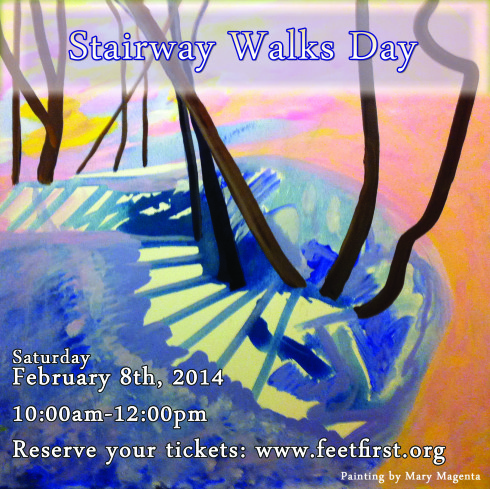
Walkability nonprofit Feet First is hosting its second Stairway Walks Day this weekend, with 18 guided neighborhood walks across the Seattle area.

Central District residents can explore the stairways of Madrona and Leschi:

Madrona and Leschi
In the late 1800s, electric trolleys first reached this bluff high above Lake Washington. New development quickly followed, leaving a legacy of stairways. We’ll explore some of the neighborhood’s discreet stairs and passageways, with their lake-spanning vistas, gorgeous old homes and beautiful volunteer-supported greenspaces.

Walk Leaders: Feet First Neighborhood Walking Ambassador, Suzanne Youles
Numbers: 3.2 miles; 371 steps down, 299 steps up.

You can join in on Saturday, February 8, from 10am to 12pm. Feet First is suggesting a $5 donation per participant. Space is limited to 25 participants, so be sure to register soon at Brown Paper Tickets.

The People of the Central Area: Brooks Andrews, Pastor, Japanese Baptist Church

This post is part of a series of profiles of Central District residents, part of the “People of the Central Area” project developed and written by Madeline Crowley.

photo by Madeline Crowley

About Brooks Andrews

Brooks’ life reveals that the twists and turns during a profound search for meaning can sometimes bring you to the very same place you began, yet entirely transformed.

Pastor Brooks Andrews on the Central Area Community of the Japanese Baptist Church:

Did your family live near the Japanese Baptist Church in the Central Area?

We lived just down the hill, east of the Church on 15th and Alder.
During World War II (WWII) internment/incarceration of the Japanese-Americans from this church, your father made a startling decision. Could you talk about that?

After the bombing of Pearl Harbor, Order 9066 by President Roosevelt sent all the Japanese on the Pacific coast to American concentration camps in the west.
Mother’s Day in 1942 was the first Sunday that the Japanese Baptist Church (JBC) and the community had been emptied of all the Japanese. This meant that Dad (Pastor of the Church) didn’t really have a job here in Seattle anymore. So, he decided that we would be moving to Twin Falls, Idaho (to minister to those in the Camp). That was about 20 miles from one of the camps, called Minidoka. And so, in late summer/early fall of 1942 when I was five-years old, Dad packed us in the car and moved us to Twin Falls.

Do you remember any feelings about that move?

I was five, so I’m not sure I remember any feelings about it, perhaps I thought it was an adventure. I do remember arriving in Idaho at the house Dad had rented for us to live in. I looked out the car window and said, “Where are the Twin Falls?” I was looking for water, for waterfalls, but it was just a house.

To read the rest of the story, click here.

Landmark status for CD’s pioneering black-owned bank up for consideration amid affordable housing plans

1968To preserve and rekindle a piece of Central District history, or prepare for the current and future needs of residents in a increasingly expensive neighborhood. That’s the debate at the heart of a bid to preserve the former, and now empty, Liberty Bank building at 24th and Union.Screen Shot 2014-02-04 at 5.44.51 PM

On Wednesday the Landmarks Preservation Board will decide if a nomination to save the bank building should move forward. The application (PDF) cites the building as the “first banking institution for African Americans in the Pacific Northwest region.”

Longtime Central District/Africatown activist Omari Garrett filed the preservation petition. For Garrett, the fight to save the bank runs deeper than just preserving a building.

“Our children are not on the street shooting each other because they don’t have a place to stay. They don’t have Black institutions to look up to, they don’t see Black bank owners,” Garrett said. “Housing is not our problem in the central area. Our problem is identity and having cultural institutions in Africatown.” Continue reading