Short Run small press festival

We’re proud to announce the 3rd annual Short Run festival will be held on Saturday, November 30th at the historical Washington Hall in the Central District neighborhood of Seattle.

Short Run was founded to celebrate Seattle’s lauded small press community, and we’re excited to bring you the grandest festival yet. The breathtaking Washington Hall will be filled with a book fair highlighting over 120 artists of comics, art books, zines and literary works focusing on regional artists, limited editions, and handmade books. Join us on “Small Business Saturday”, a nationwide campaign that makes it easy for you to shop locally for the holidays.

The spectacular stage at Washington Hall will be screening animation throughout the day. The wrap-around balcony will be home to an epic mural outlined by exhibiting artists, and colored in and added to by attendees. Other rooms will host drawing games, live silk screening, workshops, readings, and cardboard monster battles. Our decadent bake sale will be accompanied by visiting food trucks, to provide a quick bite for visitors.

After the festival closes, Washington Hall will be transformed into a “Comics Prom,” a 21 + dance party with comic book corsages, spiked punch and featuring local favorite La Luz, K Records band The Shivas, and Specs Wizard “The Elder Statesman” of Seattle area Hip Hop. $5

CD resident starring in burlesque show at Triple Door

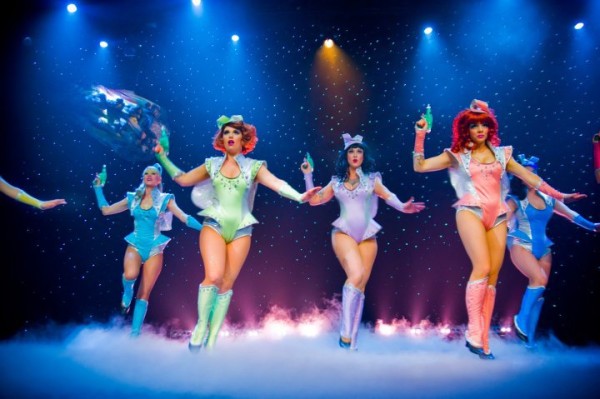
Atomic Bombshells in "Lost in Space" (photo by Michael Doucette)

Atomic Bombshells in “Lost in Space” (photo by Michael Doucette)

Like a little glitter with your science fiction?

Let’s be real. A lot of glitter. The burlesque troupe Atomic Bombshells are currently performing their third run of “Lost in Space,” a show that is self-described as “an intergalactic voyage of sight and sound, filled with alluring aliens, slinky space adventurers, bodacious Barbarellas, and planetary princesses.

One of those planetary princesses is Central District resident and award-winning burlesque performer Indigo Blue. We sat down with her ahead of opening night to learn more about her burlesque career.

You can catch “Lost in Space” every night at the Triple Door until November 16. For tickets and more information visit www.tripledoor.net or call 206-838-4333.

CD News: How did you first get started with burlesque?

Indigo Blue (photo by POCPhoto)

Indigo Blue (photo by POCPhoto)

Indigo Blue: I first started performing burlesque acts in Tamara The Trapeze Lady’s cabaret show in the early ’90’s called “The Fallen Women Follies.” Tamara is also a CD-dweller, and at the time we lived right around the corner from each other.  Her cabaret was the first opportunity I had in Seattle to perform on a public stage other than as a go-go dancer or fashion show model.  By the time Kitten La Rue and Fanny n’ Flames moved from New Orleans to Seattle just over 10 years ago, I was directing my own troupe and teaching Burlesque classes at the Home Alive Studio.  I was really excited about Kitten’s vision of The Atomic Bombshells, and happy to be invited to join the troupe.

CDN: Are you from Seattle?
IB: I was born in Northern California and came to Seattle to go to school at UW.  I fell in love with the city and haven’t been able to leave since!

CDN: Any favorite CD restaurants, bars, businesses, or other spots?
IB: I live near MLK and Jackson, a vibrant section of the CD.  I used to teach Burlesque classes at Every Body Health and Fitness and really appreciate that the owners have been able to keep a small local neighborhood gym open for so many years.  I love the community classes at Samarya yoga center on Yesler. As far as local eateries, I love Meskel Ethiopian on Cherry and I am so sad about the closing of Mesob on Jefferson!  It’s fun to have business meetings at the Broadcast Coffee shop on the corner of Yesler and 20th. I get all my fancy hairpieces and supplies right around the corner at Western Beauty Supply in the 23 Promenade.  And the Central Cinema on Union is my favorite place to see the regularly playing, locally made cult film “Waxie Moon in Fallen Jewel” (co-starring AB members Lou Henry Hoover and Inga Ingenue).

CDN: What have been some of your favorite performances?
IB: What stands out for me are the incredible opportunities I have had with the Atomic Bombshells to perform in gorgeous far-away locations like Shanghai, China and Lisbon, Portugal.

CDN: What’s unique or interesting about the Seattle burlesque scene compared to other cities?
IB: The Seattle burlesque scene is known for its wealth of international award-winning and talented performers (including Atomic Bombshells members Inga Ingenue, Miss Viva Las Vegas 2011; Lily Verlaine, 2d Runner Up Miss Exotic World 2011; and myself, Queen of Burlesque – Miss Exotic World 2011), who execute humorous and well-developed acts.  We are considered to have a strong community and collaborative ethic.  Many cities struggle with divisiveness and competition, but Seattle has had comparatively less of that than other cities.

CDN: What’s a surprising or little-known fact or aspect of burlesque? Or something audiences take for granted?
IB: A single burlesque act can take well over a year to develop including the highly technical quick-release costuming, choreography and story arc development, and rehearsal.  We often work with other talented artists such as dressmakers, music editors, prop-builders, and mentors to craft and build our routines.  And on the day of a performance, it can take 3 or more hours for a performer to prepare for one 5-minute act.  It is a carefully crafted theatrical art form that requires significant time and work to execute!  We hope that it looks effortless once we are actually on stage.

CDN: Any upcoming projects you’d like to tell us about?
IB: There are lots of exciting things in the Atomic Bombshell’s future – but for now, I can tell you to plan ahead for Valentine’s Day with our fantastic J’Adore show at the Triple Door!

Tango Speed Dating™ (45-65 yrs)

Tango Speed Dating™ by Gabriela Condrea

Tango Speed Dating™ by Gabriela Condrea

Tango Speed Dating™ by Gabriela Condrea, author of WHEN 1+1=1, is a whole new way to interact with real people, live, in-person – a chance to connect through simple, tango-inspired partner games using body language before you ever have to say anything! In-between games, you’ll get a quick chance to introduce yourself and chat, before you switch partners!

(No experience necessary!  This is a social event, not a class.)
* happy hour drink & appetizer included *

Help Samarya Center stay in the CD and thrive!

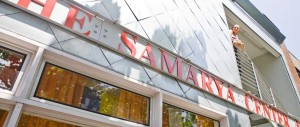
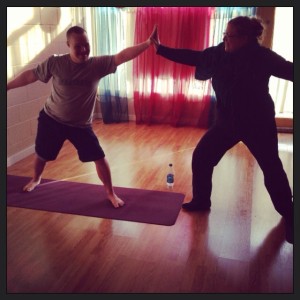
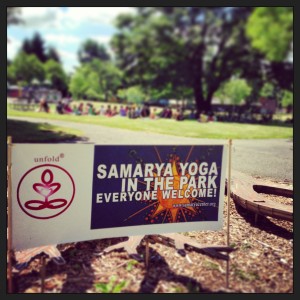
samarya_about_975x415Located at 18th and Yesler since 2001, the Samarya Center offers yoga classes, teacher training, and yoga-based therapy.  Samarya is also a training institute for Integrated Movement Therapy, a clinically sound therapy method rooted in the philosophy, practice and spirit of yoga.  The Samarya Center is not just another yoga studio, it is a place where people suffering with mental or physical disabilities can find healing through movement.

Due to the recent sale of the MK Fish building, Samarya will be moving out of their current location at the end of the year.  However, they remain committed to the Central District community and have identified a new space where Samarya can continue to provide welcoming yoga classes that are accessible to people of all backgrounds and ability levels.   The new Samarya Center will be located at 17th and Jackson, above Cheeky Cafe.  In order to fund the move into this new space, they have initiated a fundraising campaign on the Indiegogo site.  The money raised will go towards remodeling the space, including installing flooring and lighting, as well as towards the first year of rent.  Additional funds raised will be used to provide scholarship money for people needing assistance with therapy fees or teacher training tuition.

Samarya is a 501(c)3 nonprofit organization, so any donations are tax deductible.   You can find more information about what Samarya offers to the CD at their website, www.samaryacenter.org, or contact them at [email protected].  You can watch a video about Integrated Movement Therapy, or donate to the campaign, at http://www.indiegogo.com/projects/the-samarya-center-matters-please-support-our-transformation

“Samarya” means community, and this business has been a positive force in our community for 13 years.  Let’s help them stay here and stay strong!20131111214915-rw_and_alex20131111224036-IMG_6668

Lake Washington Girls Middle School’s Open House

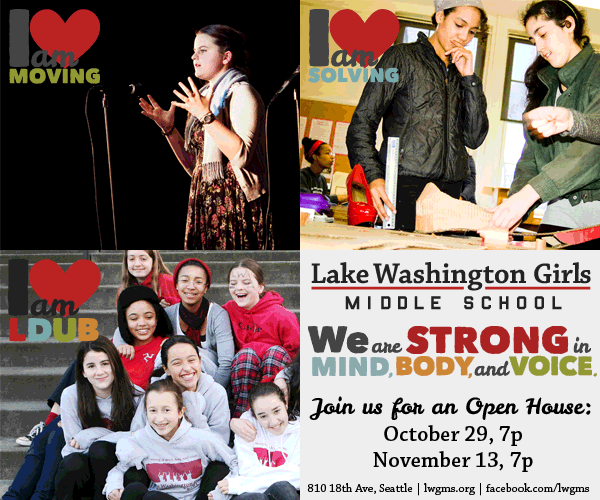
1314_Ed_Expo_GIF_v1Lake Washington Girls Middle School will be hosting its final open house of the fall admissions season tonight, November 13, from 7-9pm.

Our October Open House was attended by 130 families from all over Seattle; over 100 are expected tonight.

You are cordially invited to join us tonight. Meet teachers, parents, and students, and come learn more about our program and what it means to be an L-Dub girl!

Our Open House is a full two hour program, so please plan to be here from 7-9pm. No RSVP necessary.

Lake Washington Girls Middle School
810 18th Avenue
Seattle, WA 98122
206/709.3800

For more information click here.


Police officer helps victims from burning house, keeps flames from spreading

A Seattle Police officer helped people — and a few pets — escape the flames and removed a burning rug from a smoky house fire near 32nd Ave E and E Thomas Wednesday afternoon.

According to East Precinct radio, the police officer alerted dispatchers around 12:30 PM that she was escorting people from the house and had removed the burning rug preventing the flames from spreading. According to dispatches, the officer apparently saw the house fire while on patrol in the area. Damage was reportedly limited to smoke damage thanks to the quick response.

Seattle Fire was called to the scene to assess the situation and continue the fire response.

We will confirm details as they become available.


View Larger Map

LIHI partners with Home Depot to build shelters at Nickelsville

The Jackson Street Nickelsville homeless encampment will be receiving sleeping structures and tent platforms tomorrow, courtesy of a partnership between the Low Income Housing Institute (LIHI) and The Home Depot Foundation.

LIHI and Home Depot have assembled a group of 80 volunteers, 65 of which are Home Depot Associates, to build a total of six tent platforms and three sleeping structures at the homeless encampment at 2020 S. Jackson Street. Volunteers are also slated to paint the encampment’s existing sleeping structures, install a new storage unit for food and donations, and build a play area for children.

The project honors Veteran’s Day and the estimated 10 veterans living at the Jackson Street encampment. Recent data from the National Coalition of Homeless Veterans counts 76,229 homeless veterans. LIHI says it has made housing veterans a priority, providing homes to 400 single veterans and veterans with families and serving an estimated 1,750 veterans each year at hygiene centers called Urban Rest Stops.

“We thank The Home Depot Foundation for providing a grant of $14,000 for LIHI to purchase building materials for the tent platforms, sleeping structures, and children’s play area as well as paint, concrete blocks and a storage shed so that homeless families including veterans can have a safe place to live at Nickelsville”, said Sharon Lee, LIHI’s Executive Director, in a press release. “With the help of Home Depot volunteers, we can help end homelessness for veterans.”

The People of the Central Area: Dee Goto

This post is first in a series of profiles of Central District residents, part of the “People of the Central Area” project developed and written by Madeline Crowley.

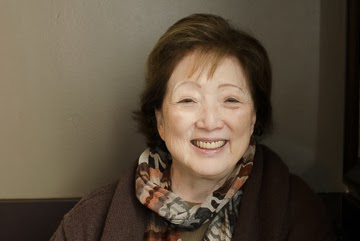
Dee Goto (photo credit: Madeline Crowley)

Dee Goto (photo credit: Madeline Crowley)

In Japanese Culture we have the Daruma Principle, when life knocks
you down seven times, you get up eight.

About Dee: Dee Goto is an author who also kept working (with many others) over many years to make the Japanese Cultural & Community Center in the Central Area a reality.

When did you live in the Central Area?
In 1960, I had been accepted in the University of Washington nursing program in public health. I worked nine months full time at King County Hospital before I started school and then worked part time at Swedish Hospital.  I came to school here from Oregon because my grandfather wanted me to go to school in Seattle; his roots in America were here.
When I got here and started looking for an apartment, my housemates and I were turned away from three different buildings before we could find one that would rent to Japanese.

In 1960? It’s interesting to learn that even in the Central Area with redlining there were further restrictions on renting to Japanese-Americans.

We ended up living at the Monticello Apartments. At that time I was studying at the Japanese Language School. My future husband’s younger sister was a classmate. I didn’t have a car and she offered to drive me home so that’s how I developed a relationship with my husband. We married on Christmas Eve in 1961.

Once you got married where did you and your husband live?

On 23rd Ave, near Holy Names. That house is still there right as you turn downhill towards the University, if you didn’t turn you’d run right into the house.

What was that neighborhood like in 1968?

When we first moved in a neighbor came over very excited that we were Japanese-Americans and were moving in.

In 1968, I was unaware of the incarceration/internment problems that had taken place in the Central Area in the ‘40s.

You grew up on the other side of the Cascades?

Not only that. We went to the incarceration/internment camp to visit and I thought they (the Japanese internees) were having a great time. Back then, we lived on a farm in Idaho, we had relocated before the war and didn’t have to go to the camp because we lived outside the restricted zone which was 400-miles from the coast.

We visited Minidoka because many of our friends were there. Living on a farm, we didn’t have neighbors very close by so when I visited it seemed like the kids in camp were all having a lot of fun. My mother particularly envied all the craft classes the ladies were taking. Also, she noticed the women didn’t have to cook. My 21 year-old Uncle worked hard during the week so he could drive to Minidoka for the Saturday night dances. Despite what seemed like the good times they were having while incarcerated, our family wouldn’t consider trading places. We knew freedom was most important.

You started talking earlier about the composition of your neighborhood on 23rd.

There was two black families across the street and one Japanese family a few doors down, the Hayashis, another black family three doors down. There were the Vogels, Germans, across the street.

We knew everybody for about 2-3 blocks; we were pretty close.  I organized Block Parties. Our kids played outside with all the other kids, they all were playing in our yard. I had doors open so there were kids running through our house. One day a kid knocked our television off its stand.  There were trikes and bikes all over in our yard. I found a photo last night of the kids making a train of these toy vehicles.

Because the kids were always playing in the street, I organized a kitchen conference and got all these signatures to get curbing put in on 23rd Avenue so the cars couldn’t rush in. That was one of the first neighborhood traffic diversions. Since then, the Department of Transportation made lots of diversionary traffic controls in the streets of Seattle but that was one of the first ones.

Another thing I learned was that after Minidoka a high percentage of people didn’t come back to the Central Area. I wonder why?

I think their feeling about the discrimination they’d faced. Some were willing to fight for what they had while others were not entrepreneurial and business-savvy so they didn’t come back and went to work for someone else. There was a time, even if one had a college degree they wouldn’t be hired. The war eased that and Japanese were known to be honest and hard workers.

With discrimination you had to be pretty self-reliant and savvy to fight through it. I think some people took the easy way out and became employees rather than business-owners. The business owners who came back are the focus of my book on the Lion’s. You needed to be strong. Discrimination in a way helped some become stronger.

To read the rest of Dee Goto’s story, click here.

Suzanne Brooker Artist Reception & Wine Tasting

Suzanne Brooker

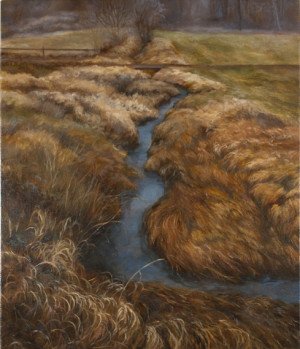
New Landscape Paintings

brooker winter 2013Nov 6th through Dec 29th
Opening Reception Sunday, Nov 17th, 3-5pm

This show is a preview selection of paintings for Suzanne’s new book on landscape oil painting from sky to water due out in late 2014 from Watson Guptil. www.suzannebrooker.com

Madrona Wine Merchants offers free wine tastings featuring 4-5 selections on a theme every Saturday from 2 until the bottles run out and on Sunday we offer a mini-tasting of two wines all day from 11-5. No matter what day you stop by we always have something open to sample.

Sunday Sippers — Argentine Bargains

ArgentinaWineMap

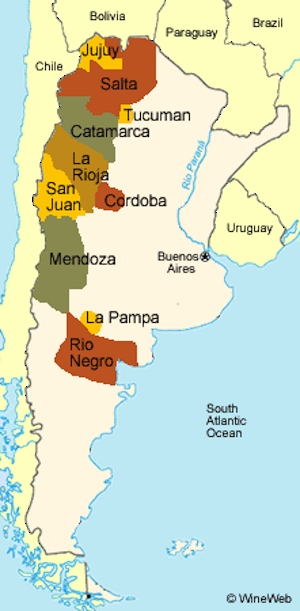
With fall upon us our thoughts turn to spring in South America. This Sunday we will be trying two economical reds from our friends south of the equator. Come travel with us to Argentina.

2010 25 Lagunas Petit Verdot Reserve                                            ($9)
A Petit Verdot from the north part of Argentina that has a lot of earthy funk along with big fruit. Was $12 now $9

2012 Altos las Hormigas Colinia las Liebres                                    ($8)
Bonarda Mendoza Region Bright raspberry fruit flavors. Rich and tasty. Take this bunny home with you.

Madrona Wine Merchants offers free wine tastings featuring 4-5 selections on a theme every Saturday from 2 until the bottles run out and on Sunday we offer a mini-tasting of two wines all day from 11-5. No matter what day you stop by we always have something open to sample.