In Japanese Culture we have the Daruma Principle, when life knocks
you down seven times, you get up eight.
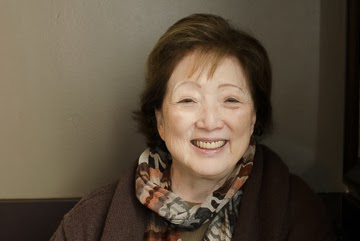
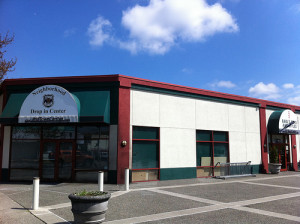
About Dee: Dee Goto is an author who also kept working (with many others) over many years to make the Japanese Cultural & Community Center in the Central Area a reality.
When did you live in the Central Area?
In 1960, I had been accepted in the University of Washington nursing program in public health. I worked nine months full time at King County Hospital before I started school and then worked part time at Swedish Hospital. I came to school here from Oregon because my grandfather wanted me to go to school in Seattle; his roots in America were here.
When I got here and started looking for an apartment, my housemates and I were turned away from three different buildings before we could find one that would rent to Japanese.
In 1960? It’s interesting to learn that even in the Central Area with redlining there were further restrictions on renting to Japanese-Americans.
We ended up living at the Monticello Apartments. At that time I was studying at the Japanese Language School. My future husband’s younger sister was a classmate. I didn’t have a car and she offered to drive me home so that’s how I developed a relationship with my husband. We married on Christmas Eve in 1961.
Once you got married where did you and your husband live?
On 23rd Ave, near Holy Names. That house is still there right as you turn downhill towards the University, if you didn’t turn you’d run right into the house.
What was that neighborhood like in 1968?
When we first moved in a neighbor came over very excited that we were Japanese-Americans and were moving in.
In 1968, I was unaware of the incarceration/internment problems that had taken place in the Central Area in the ‘40s.
You grew up on the other side of the Cascades?
Not only that. We went to the incarceration/internment camp to visit and I thought they (the Japanese internees) were having a great time. Back then, we lived on a farm in Idaho, we had relocated before the war and didn’t have to go to the camp because we lived outside the restricted zone which was 400-miles from the coast.
We visited Minidoka because many of our friends were there. Living on a farm, we didn’t have neighbors very close by so when I visited it seemed like the kids in camp were all having a lot of fun. My mother particularly envied all the craft classes the ladies were taking. Also, she noticed the women didn’t have to cook. My 21 year-old Uncle worked hard during the week so he could drive to Minidoka for the Saturday night dances. Despite what seemed like the good times they were having while incarcerated, our family wouldn’t consider trading places. We knew freedom was most important.
You started talking earlier about the composition of your neighborhood on 23rd.
There was two black families across the street and one Japanese family a few doors down, the Hayashis, another black family three doors down. There were the Vogels, Germans, across the street.
We knew everybody for about 2-3 blocks; we were pretty close. I organized Block Parties. Our kids played outside with all the other kids, they all were playing in our yard. I had doors open so there were kids running through our house. One day a kid knocked our television off its stand. There were trikes and bikes all over in our yard. I found a photo last night of the kids making a train of these toy vehicles.
Because the kids were always playing in the street, I organized a kitchen conference and got all these signatures to get curbing put in on 23rd Avenue so the cars couldn’t rush in. That was one of the first neighborhood traffic diversions. Since then, the Department of Transportation made lots of diversionary traffic controls in the streets of Seattle but that was one of the first ones.
Another thing I learned was that after Minidoka a high percentage of people didn’t come back to the Central Area. I wonder why?
I think their feeling about the discrimination they’d faced. Some were willing to fight for what they had while others were not entrepreneurial and business-savvy so they didn’t come back and went to work for someone else. There was a time, even if one had a college degree they wouldn’t be hired. The war eased that and Japanese were known to be honest and hard workers.
With discrimination you had to be pretty self-reliant and savvy to fight through it. I think some people took the easy way out and became employees rather than business-owners. The business owners who came back are the focus of my book on the Lion’s. You needed to be strong. Discrimination in a way helped some become stronger.
To read the rest of Dee Goto’s story, click here.



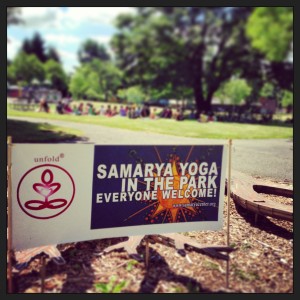
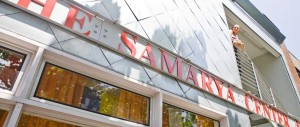 Located at 18th and Yesler since 2001, the Samarya Center offers yoga classes, teacher training, and yoga-based therapy. Samarya is also a training institute for Integrated Movement Therapy, a clinically sound therapy method rooted in the philosophy, practice and spirit of yoga. The Samarya Center is not just another yoga studio, it is a place where people suffering with mental or physical disabilities can find healing through movement.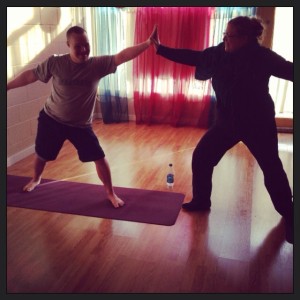
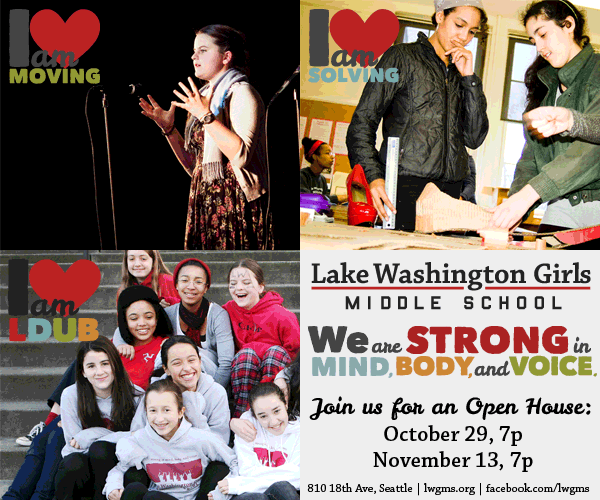 Lake Washington Girls Middle School will be hosting its final open house of the fall admissions season tonight, November 13, from 7-9pm.