Flu now ‘widespread,’ County Health says time to get vaccinated

usmap52Hey, procrastinator (I said to myself) — It’s time to get some flu spray up your nose!


Seasonal flu widespread in King County, young adults more vulnerable than usual


Monday, January 6, 2014

If you’ve noticed more people are sick at work or at school, it might be the flu. Infections are on the rise locally, as seasonal influenza has gone from barely detectable levels in early December to widespread in King County.

“It’s easy to get complacent about the flu, since we see it every year, but it brings real hardship and dangers,” said Dr. Jeff Duchin, Chief of Communicable Disease Epidemiology & Immunization for Public Health – Seattle & King County. “Catching the flu can not only disrupt your life, it can be severe enough to send you to the hospital.”

Two noteworthy aspects of this year’s flu season:

  • Younger adults face a greater risk of severe illness than usual. Locally and across the US, healthcare providers are reporting an increase in severe influenza infections – requiring intensive hospital care for young and middle-age adults. The predominant strain circulating currently is influenza A H1N1, which happens to be the same one that led to the 2009 flu pandemic. This virus causes infections and severe illness in all ages, but compared to other influenza strains, it causes higher rates of illness and death among young and middle-age adults, including those with no underlying health conditions. 
  • Pregnant women should get vaccinated at any stage of pregnancy. The flu vaccine is both safe and effective for pregnant women, including during the first trimester. Vaccinating during pregnancy protects not only the mother but the fetus and child as well. Newborn infants can’t be vaccinated until they’re six months old.

Anyone who lives with or cares for an infant younger than six months should also get vaccinated to protect the infant from getting flu.

Other members of the community at increased risk for severe influenza include the elderly and people who have long-term health problems, like diabetes, asthma, and heart or lung problems.

Flu vaccine is the best protection; other drugs also available

The flu vaccine is in plentiful supply, and it’s not too late to get vaccinated to reduce your chances of getting the flu. Influenza activity generally peaks in January or later in our region and continues circulating until spring.

“Anyone six months and older who has not yet been vaccinated this season should get an influenza vaccine now to reduce their risk of illness,” said Duchin.

Another important line of protection is antiviral drugs, especially for people with severe influenza or at high risk of complications. Antiviral treatment should be started promptly if you are pregnant or in a high-risk group and develop flu symptoms, including fever, cough, sore throat and muscle aches.

Where to get flu vaccine

Flu vaccine (shots and nasal spray) is available at many healthcare provider offices and pharmacies for those who have insurance or are able to pay for vaccination. Visit http://flushot.healthmap.org to help find locations.

If you don’t have insurance, you can find free or low-cost insurance through Washington Healthplanfinder. Other immunization assistance is available through the Family Health Line at 800-322-2588.

For more information, visit www.kingcounty.gov/health/flu.

Country Doctor opens new after-hours clinic as an affordable emergency room alternative

Story by Jacob Olson

IMG_6652Country Doctor has provided affordable health care on Capitol Hill for more than 40 years. Now it is finishing 2013 with a new attribute sure to be valued by area residents: convenience. But, in the rapidly changing economic landscape of the Affordable Care Act, the new clinic is about more than making it easier for the community to seek urgent care.

Opened quietly in early December, Country Doctor Community Health Clinic’s new after-hours Clinic — located next door the the Emergency Room at Swedish Medical Center – Cherry Hill Campus at 16th and Cherry and made possible by a partnership between CDCHC and the hospital — is already proving to be a valuable resource as an alternative to visiting the ER for a non-emergency or to waiting days to get in at a regular clinic where they may or may not be an established patient. But if the nonprofit walk-in urgent care clinic wants to keep its doors open over the long run, it will need to see a significant increase in its patient load before a $200,000 Swedish Foundation grant to cover the clinic’s operation costs for the first three months runs out

IMG_6649

“This is something that wasn’t going to get much traction [before] because it could potentially have a negative impact on the revenue of the ER docs,” CDCHC executive director Linda McVeigh said. “But you know the world has changed, and reimbursements for visits to the emergency room that aren’t true emergencies are decreasing rapidly, just because of all the Affordable Care Act,” she said.

“You go in the ER with a cold and you’re a Medicaid patient..it’s going to cost the state, what, five-hundred dollars? You come to us, it’s going to cost the state at the most maybe one-hundred dollars, so there’s that excess cost related to ER visits that’s a big incentive to drive down.”

Richard Kovar, CDCHC’s medical director, said that with two nurse practitioners, two medical assistants, and two front desk personnel on hand at any time, the after-hours Clinic is currently staffed to accommodate about 25 to 30 patients on weekdays when it is open from 6pm to 10pm, and even more patients on Saturdays and Sundays when it is open from noon to 10pm. That’s a potential total of about 250 to 300 patients per week. That is also about the number of patients it will take for the clinic to be self-sufficient, McVeigh said.

In keeping with Country Doctor’s mission, the after-hours Clinic will seek to provide “high-quality, caring, culturally appropriate” health care to everybody, regardless of insurance status or ability to pay. However, while Country Doctor currently serves a patient population that is about 53% uninsured at its federally-subsidized primary healthcare clinics—the Country Doctor Community Clinic on Capitol Hill at 19th and Republican, and the Carolyn Downs Family Medical Center in the Central Area, at 21st and Yesler—McVeigh said she hopes that the portion of uninsured patients seen at the unsubsidized after-hours Clinic will be around 35%.

Country Doctor is banking on the prediction that a significantly higher number of patients it sees at the after-hours Clinic will be on Medicaid, especially through Washington State’s Apple Health program, after the national Affordable Care Act takes full effect on January 1st, and that other patients might also be newly enrolled in subsidized insurance exchanges. Indeed, while private, for-profit, medical centers like Swedish generally lose money treating patients on Medicaid and Medicare, Federally Qualified Community Health Centers like Country Doctor generally receive better compensation from Medicaid through extra subsidies, often times making the payouts from the government program preferable to private insurance, who might persistently negotiate down prices or refuse to pay for certain items, for FQCH’s like Country Doctor, Kovar said.

The Affordable Care Act encouraged the opening of the new after-hours clinic not only because Country Doctor stands to possibly see increased revenue through a potentially more well-funded payer mix than before, but also because the bill is making it less lucrative for private hospitals to treat some patients in the ER, McVeigh said.

The prospect of saving money, especially come January, by steering patients away from what Kovar termed “inappropriate use” of the emergency room, and towards the after-hours clinic, as well as the chance to help Country Doctor provide better healthcare to the community, has motivated Swedish to assist the clinic in its new venture. In addition to the $200,000 start-up grant from the Swedish Foundation, the hospital is leasing the space for the after-hours Clinic, used by Swedish as a resident family medicine clinic from 9am to 5pm on weekdays, to CDCHC for just $1 per year. There are even talks of eventually setting up another Country Doctor after-hours Clinic at another Swedish location if the Cherry Hill effort proves a success.

“I think it’s been good we’ve started off slow,” said McVeigh, who described the new after-hours clinic’s December 2 launch as a “soft opening.” “We have an all new staff, in a whole new facility. All of those staff are using a whole new electronic health record, so it’s been good there haven’t been 40 people a night storming the doors,” she said.

“But we need to build up a patient population there, or we’re not going to be able to continue it, because we won’t be able to afford it.”

As for Country Doctor, the organization stands to be able to both provide better care to the community at large, and also to its existing patients at its primary care clinics, through running the after-hours Clinic.

“First of all, it’s our mission to provide access in our community, to care, and this is one way to do it,” McVeigh said. The director said that over the last several years Country Doctor has been realizing it needs to able to provide “episodic care” to people who do not necessarily want to establish ongoing care with a primary physician, and that patients who call in to Country Doctor, especially those who are not established patients, will often be able to be seen much sooner at the after-hours Clinic than they would be if they had to wait for appointment at one of CDCHC’s existing primary care clinics. Even for existing patients, the wait time for a non-emergency appointment can be up to a week, McVeigh said. She hopes the after-hours will free up some of the urgent care needs the primary care clinics currently get swamped down with so that those sites can better focus on providing ongoing care for patients who make the clinics their “medical home.”

IMG_6666Though it is set up to provide one-off care to people with urgent needs, the after-hours Clinic still upholds CDCHC’s mission of providing more comprehensive health care, in part by trying to connect urgent care patients to places where they can establish longer term care.

“Our goal is to hook people,” Kovar said. “We’re referring people who do not have a medical home to medical homes,” he explained. “By nature of them coming to here to be seen, they are now an established patient, a new patient [with CDCHC], and then if they live in other communities, where there are other community clinics, other community health centers, we will recommend them to those health centers,” Kovar said. Connecting urgent care patients with primary care is also one way that the after-hours Clinic can help “break the cycle” of people waiting so long to get care because they believe they cannot afford a doctor that they end up in the emergency room, and possibly the hospital, McVeigh said.

One of the biggest challenges in getting the after-hours Clinic off the ground was finding clinicians to staff it, both McVeigh and Kovar said, due to the nights and weekends schedule the clinic demands, and other challenges. Though Country Doctor was unable to hire any MD’s to staff the clinic, they were able to hire of staff of four nurse practitioners, three of whom are recent graduates of Seattle University’s nursing program, located just a few blocks away from the Cherry Hill location of the clinic.

“We’re pretty excited about the fact that we have ARNPs staffing that clinic,” McVeigh said “I think it’s the wave of the future, because there aren’t enough docs.” McVeigh and Kovar also both said that it is a benefit to have practitioners already familiar with and invested in the local community. Indeed, in addition to the new-hires at the after-hours clinic, most other practitioners for CDCHC live in or close to the communities they work in. “90% of us live in the neighborhood,” Kovar said. “This is our community.”

You can learn more at countrydoctor.org.

Murray sworn in as 53rd mayor, Sawant extolls socialist principles during oath ceremony

Murray takes the oath from ambassador to China Gary Locke, on a Gaelic bible held by Murray’s husband, Michael Shiosaki (Image: @Mayor_Ed_Murray)

Murray takes the oath from ambassador to China Gary Locke, on a Gaelic bible held by Murray’s husband, Michael Shiosaki (Image: @Mayor_Ed_Murray)

Ed Murray was sworn into office as the 53rd mayor of Seattle Monday afternoon in the packed lobby of his new office at city hall. But it was the council’s newest member and her raucous supporters that stole the show. Supporters of Kshama Sawant packed the house sporting red shirts and signs emblazoned with pro $15 an hour minimum wage messages.

Murray may take office as the first mayor from Capitol Hill. He’s definitely the first openly gay man to take the post. Sawant was the first socialist in nearly 100 years to be sworn into the city council.
Sawant and Murray gave vastly different speeches following their oaths. While Murray talked inclusiveness and good governance, potholes and police were far from Sawant’s mind as she spoke for nearly nine minutes on the ills of international capitalism and the dysfunction of the two-party system (see a transcript of her remarks below).
“I wear the badge of socialist with honor,” she said, thanking the some 100,000 people that voted her into office and driving home the point that socialists are far from the fringe in Seattle.

Sawant takes the oath of office from Washington State Labor Council Vice President Nicole Grant (Image: @Ed_Murray_Mayor)

Sawant takes the oath of office from Washington State Labor Council Vice President Nicole Grant (Image: @Ed_Murray_Mayor)

Sawant began her speech by raising a fist and ended it simply by saying “solidarity.”
Council members Mike O’Brien, Nick Licata and Sally Bagshaw were sworn in at the ceremony. They earned some cheers in their own right, but none as big as when they touched on raising the minimum wage. City attorney Pete Holmes was also sworn into office and made several nods to the city and state’s historic end to marijuana prohibition.
The 2014 crop of elected officials technically assumed office in December, but this was the day for pomp and circumstance.
Earlier in the day Murray spent some time on Capitol Hill attending noon mass at Seattle University’s Chapel of St. Ignatius. Murray, who frequently attends mass at the chapel, told CHS he didn’t want the entire day to be about ceremony. The mayor kicked off inauguration day volunteering at Mary’s Place women’s shelter.unnamed

Remarks given by Kshama Sawant following her swearing in:

My brothers and sisters,

Thank you for your presence here today.

This city has made glittering fortunes for the super wealthy and for the major corporations that dominate Seattle’s landscape. At the same time, the lives of working people, the unemployed and the poor grow more difficult by the day. The cost of housing skyrockets, and education and healthcare become inaccessible.

This is not unique to Seattle. Shamefully, in this, the richest country in human history, fifty million of our people – one in six – live in poverty. Around the world, billions do not have access to clean water and basic sanitation and children die every day from malnutrition.

This is the reality of international capitalism. This is the product of the gigantic casino of speculation created by the highway robbers on Wall Street. In this system the market is God, and everything is sacrificed on the altar of profit. Capitalism has failed the 99%.


Despite recent talk of economic growth, it has only been a recovery for the richest 1%, while the rest of us are falling ever farther behind.


In our country, Democratic and Republican politicians alike primarily serve the interests of big business. A completely dysfunctional Congress DOES manage to agree on one thing – regular increases in their already bloated salaries – yet at the same time allows the federal minimum wage to stagnate and fall farther and farther behind inflation. We have the obscene spectacle of the average corporate CEO getting seven thousand dollars an hour, while the lowest-paid workers are called presumptuous in their demand for just fifteen.

To begin to change all of this, we need organized mass movements of workers and young people, relying on their own independent strength.That is how we won unions, civil rights and LGBTQ rights.


Again, throughout the length and breadth of this land, working people are mobilizing for a decent and dignified life for themselves and their children. Look at the fast food workers movement, the campaigns of Walmart workers, and the heroic activism to stop the Keystone XL pipeline!


Right here in SeaTac, we have just witnessed the tremendous and victorious campaign for fifteen dollars an hour. At the same time, in Lorain County, Ohio, twenty-four candidates ran, not as Democrats or Republicans, but as ‘Independent Labor’ and were elected to their City Councils.

I will do my utmost to represent the disenfranchised and the excluded, the poor and the oppressed – by fighting for a $15/hour minimum wage, affordable housing, and taxing the super-rich for a massive expansion of public transit and education. But my voice will be heard by those in power only if workers themselves shout their demands from the rooftops and organize en masse.


My colleagues and I in Socialist Alternative will stand shoulder to shoulder with all those who want to fight for a better world. But working people need a new political party, a mass organization of the working class, run by – and accountable to – themselves. A party that will struggle and campaign in their interest, and that will boldly advocate for alternatives to this crisis-ridden system.

Here in Seattle, political pundits are asking about me: will she compromise? Can she work with others? Of course, I will meet and discuss with representatives of the establishment. But when I do, I will bring the needs and aspirations of working-class people to every table I sit at, no matter who is seated across from me. And let me make one thing absolutely clear: There will be no backroom deals with corporations or their political servants. There will be no rotten sell-out of the people I represent.


I wear the badge of socialist with honor. To the nearly hundred thousand who voted for me, and to the hundreds of you who worked tirelessly on our campaign, I thank you. Let us continue.


The election of a socialist to the Council of a major city in the heartland of global capitalism has made waves around the world. We know because we have received messages of support from Europe, Latin America, Africa and from Asia. Those struggling for change have told us they have been inspired by our victory.


To all those prepared to resist the agenda of big business – in Seattle and nationwide – I appeal to you: get organized. Join with us in building a mass movement for economic and social justice, for democratic socialist change, whereby the resources of society can be harnessed, not for the greed of a small minority, but for the benefit of all people. Solidarity.

Preschool Fair on Sat. 1/11/14

Over 30 Preschools will be at the Central Seattle Parent Resource (CSPR) 4th Annual Preschool Fair on Saturday, January 11, 2014, from 10:30 a.m. to 12:30 p.m. at Garfield Community Center. Thanks to the generosity of Garfield Community Center and the parents who volunteer to organize this event, the fair is FREE for families and participating schools.  Some participating schools include:

Behnke Preschool, Boyer Children’s Clinic, Bright!, Capitol Hill Co-op, Cottage School at Montlake, Denise Louie Education Center, El Cuento, Epiphany Early Learning, Giddens, Harvard Avenue School, Illuminate, King Street Co-op, Lakewood Co-op, The Learning Express, Learning Tree Montessori, Les Enfants de Seattle, Los Ninos de Seattle, Madison Park Co-op, Madrona Place Two, Mount Baker Preschool, Nanny’s Preschool, s Annex Preschool, s Preschool, Preschool Adventures Learning Center, Rainier Valley Co-op, Saint Mark’s Preschool, St. Therese Catholic Academy, Seattle Amistad, Seattle Progressive Preschool, Secret Garden Preschool

Central Seattle Parent Resource promotes community among parents of children from birth to age five by encouraging social connections which build foundations for long term civic involvement. For more information, visit: www.centralseattleparentresource.com

Finding Your Way Through Aging, by Rob Liebreich of Aegis on Madison

Aegis-on-Madison-LogoBy 2030, Washington State’s elderly population is forecasted to reach nearly 1.7 million people, or 1/5 of the state’s total population.  This is in contrast to the nearly 460,000 people over 65 in the 2010 Census.
In particular, from 2000 to 2010, Seattle actually realized a decrease in the number of people 65 and better according to the 2010 Census.  However, during the same time Seattle saw its greatest growth in the 55 to 64 range.  This dip of elders may create a false sense that action can be delayed in improving systems within the city to accommodate the pending graying of the Emerald City, however, now is the best time to prepare.

Today, three generations make up the 65 and better population.  These include:

GI or Greatest Generation with people born between 1900 and 1924.  As a group, the Census Bureau shows that in 2010, we currently had 1.9 million 90+ olds in the United States representing 4.7 percent of those 65 and better versus just 2.8 percent in 1980.  This group is often identified with great sacrifice during WW II, and being parents of the “Baby Boom” generation.

Silent Generation with people born between 1925 and 1945.  Most of this generation remembers the hardship of the great depression as children, and work hard to prevent such occurrences in their personal lives, resulting in a relatively ambitious generation.

Baby Boomer Generation with people born between 1946 and 1964.  With 76 million children born into this generation, this group has lived through some of the most dramatic social changes in the history of the United States.  Right now, this generation is faced with the task of both caring for their aging parents (many in the GI Generation) and supporting their children financial.

Understanding Senior Living Options

This is the second class of a lecture series co-sponsored by Aegis on Madison and Seattle Parks and Recreation entitled, “My Aging Loved One Needs Assistance – What Are My Options?”  You’ll find the full lecture series agenda at www.AegisonMadison.com.

Understanding Senior Living Options. What is a  retirement community? CCRC? Group
home?  Assisted living? Memory Care? Nursing home?  Home care? Home
health? Hospice?

Refreshments will be served.

Tuesday,  January 28th  6:30 pm  – 7:30 pm

Kindly RSVP to Simona at 206-325-1600 or [email protected]


When is it Time for Help?

January also marks the beginning of a lecture series co-sponsored by Aegis on Madison and Seattle Parks and Recreation entitled, “My Aging Loved One Needs Assistance – What Are My Options?”  This is the first class in this series. You’ll find the full lecture series agenda at AegisonMadison.com.

When is it Time for Help?  Recognizing the signs of dementia and general need for assistance.  How to navigate difficult conversations about moving and receiving help.

Refreshments will be served.

Kindly RSVP to Simona at 206-325-1600 or [email protected]

Chuck’s Central District is open for business

(Image: Alex Garland for CDN/CHS)

(Image: Alex Garland for CDN/CHS)

The long-awaited opening of Chuck’s Hop Shop in the Central District finally arrived this weekend, when the new Chuck’s Central District opened its doors at 20th and Union.

Chuck Shin, owner of the popular Greenwood bottle shop, announced back in March he’d signed a 10-year lease at the former Copymaster building on Union. The shop delayed opening several times throughout the spring and summer as they awaited permits from the city. Chuck’s passed its final inspections before the holidays and flung open its doors Friday afternoon. Neighbors trickled in, and by Friday evening, the place was packed.

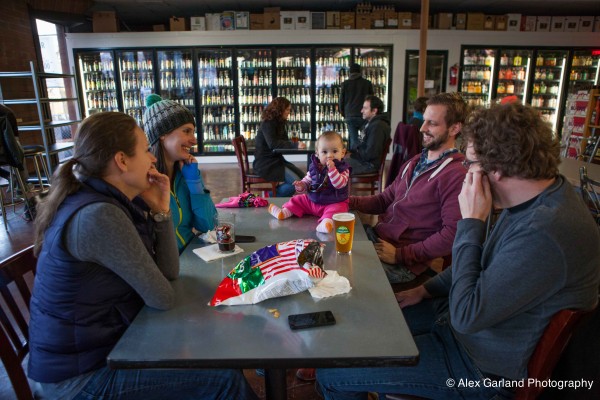
Chuck’s Central District is part bottle shop, part community gathering place: kids and dogs are welcome. They’ll soon be announcing a line up of visiting food trucks. Check their Facebook page for news on the truck schedule, open hours, and the rotating tap list.

A huge refrigeration unit lines the back wall of the building, where you can choose bottles of porter, IPA, stouts, and sours. A smaller cooler holds ciders, many of them local. Chuck’s charges a small corkage fee for bottles consumed in the building and also offers pours of 49 rotating beers on tap. They’re not quite at full capacity yet, but you can find about 18 beers on tap this week.

In another sign Chuck’s is integrating well with the neighborhood, the shop has already scheduled a brewer’s night with the Central District’s own Standard Brewing. On January 18, look for four Standard Brewing beers on tap at Chuck’s.

SPD releases additional information about last night’s shooting at 12th and Jefferson

Last night we reported on the shooting at 12th and Jefferson, and this morning SPD has more details:

A call of “shots fired” in the area of 12th and Jefferson last night is now being investigated as a shooting after a 24-year-old man walked into Harborview Medical Center with gunshot wounds to his arm and side.

Last night, at about 8:15 pm, East Precinct officers responded to several calls of “shots fired” near 12th and Jefferson.  Officers arrived but did not locate anything at that time.  Approximately 15 minutes later, officers were notified that  a gunshot wound victim had walked into Harborview’s Emergency Room and was taken into surgery.  The preliminary information is that the injury is not considered to be life-threatening.  Officers investigating the original call were able to locate shell casings in front of a business in the 400 Block of 12th Avenue.  A witness later informed police that the victim had been at the scene of the shooting.  Officers collected evidence from the scene and the hospital.  Detectives were notified and will be following up on this incident.

Fund human need, not corporate greed!

The new year brings questions about the funding for childcare, social services and education. As the Washington state legislature starts, the needs of poor and working women & children must be a priority. The most vulnerable must not again have the budget balanced on their backs while greedy corporations get tax breaks. Get involved with Sisters Organize for Survival and fight for this reality! Together, we can send this message strongly to elected officials. All are welcome!