Who will lead the (hopefully) United Neighborhoods of District 3?

Screen Shot 2013-11-07 at 9.17.04 PMLike it or not, district-based city council seats will be here in 2015. As of Thursday’s last count, nearly 65% of Seattle voters approved Charter Amendment 19 to drastically re-calibrate the city’s top elected body. Under the new arrangement the city will have seven district-based council seats and two at large representatives, with the Central District falling in Seattle District 3.

District-based council seats represent a historic shift in the political dynamics of the city and will likely cast a microscope over neighborhood politics. Madison Park moms, Seattle Central Community College students, and Central District old-timers will now all be jostling to elect and influence one single council member in the Fighting Third.

A lot of political rising and falling can happen in two years, so District 3 candidate predictions may be premature. Who would run if the elections were held today? Wyking Garrett? Sandy Cioffi? Bobby Forch? Dominic Holden? Jason Lajeunesse? Toss out your best guesses/nominations in comments.

Kshama Sawant, your first District 3 Council alderperson? (Image: CHS)

Kshama Sawant, your first District 3 Council alderperson? (Image: CHS)


Screen Shot 2013-11-07 at 9.22.19 PMOne person who definitely won’t be running is Madrona resident Richard Conlin, who announced his plans Wednesday to not seek reelection after his two-year term. Conlin went through a bruising campaign this cycle against firebrand socialist Kshama Sawant. District 3′s first Council chief might not be a very interesting discussion by the time the final 2013 votes are counted. Sawant’s camp believes the late tallies have swung so far toward the Socialist Alternative candidate’s favor that she’ll win the race outright. District 3, your first leader might already be in place.Screen Shot 2013-11-07 at 9.22.36 PM

Those running for district seats must reside in the district, but are only required to have lived there for 120 days prior to being elected. Council members must also stay in the district throughout their term in office. At-large candidates can live anywhere in the city. According to the charter amendment the districts will be redrawn every decade to account for population shifts.

One upside of the boundaries is that demographic changes in the district will be easy to track. Eastlake aside, the three Capitol Hill and Central District zip codes — 98122, 98102, and 98112 — are a near mirror of the District 3 boundaries. District 3 may also have the widest household income range of any other district in the city, from the near $250K average annual incomes in Broadmoor, to an $18K average annual income in one Yesler Terrace precinct.

Picture 1

The changeover from all at-large to mostly district representation will be a little tricky and won’t be fully on-track until 2017. That’s when the two at large council members will be elected to 4-year terms; district representatives will run for 4-year terms starting in 2015. Here are the details of the transition from King County Elections:

To make the change to districts, the five council members elected in the 2011 City Council elections would serve their present terms ending on December 31, 2015, and the four council members elected in the 2013 City Council elections would serve two-year terms also ending on December 31, 2015. In 2015, the two at-large council members would be elected to two-year terms ending on December 31, 2017, and the seven district council members would be elected to four year terms ending on December 31, 2019. Thereafter, all members would be elected to four-year terms.

Seattle District 3 includes Capitol Hill and the Central District as well as the heavily residential, homeowner dominated neighborhoods of Madison Park, Madrona, and Montlake. Critics of the boundaries have argued that the map was drawn up based on irrelevant geographic boundaries that disenfranchised denser neighborhoods by splitting them apart.

District supporters have promised greater accountability from elected officials. For many that will mean having a one stop complaint-line for any issue, instead of having to look up which council member chairs the relevant committee.

The new district representatives will also presumably be an important voice on wider neighborhood issues. Where current at-large council members can afford to dither on neighborhood nit-and-grit, the District 3 rep would likely be pressed to take a stance on specific issues.

Most of District 3 is contained east of I-5, but there are two notable exceptions. According to the Districts Now! map, District 3 takes a strip of downtown blocks between 5th and 6th Avenues to include the King County jail, SPD headquarters, and the municipal court. A small chunk of South Lake Union included in the district scoops up The Fred Hutchinson Cancer Research campus and Lake Union Park.

Seattle-Districts-Now_7-2_Map.pdf
 

SPD arrests man after he broke into ex-girlfriend’s Central District home

The Seattle Police Department blotter has the story:

East Precinct officers responded to a report of a burglary in progress just after midnight near 26th Avenue and East Pine Street.  As officers were enroute, the 911 operator was told by the victim that the man coming through her bathroom window might be her ex-boyfriend. The operator also heard the victim yelling at someone to get off her bed and get off her before the line was disconnected.

Officers quickly arrived at the house and were met by the victim.  She indicated that the suspect, her ex, had fled to the basement.  Officers went down to the basement where they could see the suspect hiding inside a crawl space, trying to conceal himself with insulation.  Officers were able to get the suspect to climb out of the crawl space and arrested him.

The vicitm told officers that the suspect is her ex-boyfriend and that he had climbed through a previously broken window.  She also told officers that as she was on the phone with 911, he had grabbed her and forced her out of her bedroom into the living room.  He grabbed the phone from her hand and disconnected with 911 before throwing the phone to the floor.  It was at that point that officers were at the front door, so he fled to the basement.

The suspect gave officers several different names before finally admitting to his true identity.  Officers located several outstanding warrants for his arrest, as well as a Domestic Violence No-Contact Order with the victim listed as the protected person.  The 24-year-old man was later booked into the King County Jail for Investigation of Burglary, Investigation of DV Assault, the outstanding warrants, and officers are requesting the additional charge of interferring with the reporting of domestic violence assault.  Detectives will handle the follow up investigation.

Pratt Fine Arts Center offering free Veterans Glassblowing Day

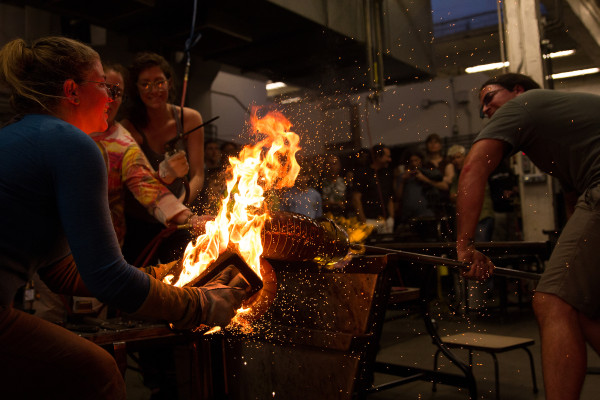
A recent glassblowing demonstration at the Pratt Fine Arts Center. (photo by Alec Miller)

A recent glassblowing demonstration at the Pratt Fine Arts Center. (photo by Alec Miller)

The Pratt Fine Arts Center is hosting free Glassblowing classes for all veterans and their families this Saturday, November 9. Pratt’s classes are part of a nationwide initiative to offer free glassblowing instruction to veterans in honor of Veterans Day on Monday

“The goal of the event is to expose men and women to the world of glass art as well as affording troops the chance to develop a technical skill. Veterans Glassblowing Day hopes to unify the glassblowing community, and bring awareness to the craft and various organizations through their involvement,” Pratt announced in a press release.

The instruction will be split into two sessions, with a morning group from 9:30am to 1:30pm and an afternoon group from 1:45pm to 5:45pm.

Veterans and their families can sign up online  www.pratt.org/classes

Organizations participating in the Veterans Glassblowing Day hope to make these classes a permanent opportunity, starting a nonprofit that offers scholarships for veterans to learn glassblowing and secure apprenticeships with professional artists. They’ll then have a marketable skill and the invaluable ability to self-express through art.

23rd Avenue Action Plan meeting tonight will discuss neighborhood greenway

Greenway alternatives

Greenway alternatives

City planners will meet with the community tonight to talk about a fantastic opportunity to overhaul a major connection between the Central District, eastern Capitol Hill and Montlake. Here’s what Seattle Bike Blog has to say about the process to plan a $46 million overhaul of 23rd Ave including a proposed greenway system for bicyclists and walkers to travel across the area:

A neighborhood greenway is simply not a replacement or alternative to building safe bike lanes on commercial streets. These commercial streets should be places that bring neighbors together, not walls that split a neighborhood in half. People should be able to walk and bike safely from their homes to the doors of neighborhood restaurants and cultural centers. A neighborhood greenway might get you a block or two away, but that’s a block or two short of the goal.

So yes, let’s build a great neighborhood greenway (or two) in the Central District. But let’s also keep working to make sure investments in the city’s planned remake of 23rd Avenue put neighbors first.

Wednesday’s meeting will focus on potential paths (seen on the map above) for routes parallel to 23rd Ave where a bike friendly greenway could be implemented.

23rdGreen_logoYou’re Invited!

The city is seeking input on where the 23rd Avenue Corridor greenway should be constructed. Please join us at a community open house to discuss the route and some of the features it will include. Be a part of creating a great greenway for all!

Community Open House

Wednesday, November 6

5:30 – 7:30 p.m.

Nova High School auditorium

300 20th Avenue East

Seattle

To request an interpreter, please call (206) 733-9990.

You can also provide feedback to planner [email protected].

Potential features of the greenway include:

  • Pavement markings and signage to alert motorists to expect people bicycling

  • Improved crosswalks and ADA curb ramps to make pedestrian mobility easier

  • Way-finding to provide guidance along the route, letting people know where the greenway goes and what’s nearby, like parks, schools and business districts

  • Median islands, traffic circles, curb bulbs and speed humps to help reduce vehicle speeds and discourage drivers from avoiding arterials by cutting through on neighborhood streets

  • New signage to control traffic crossing the greenway and make crossings easier for pedestrians and bicyclists

Planning for the bike and greenway component is part of the 23rd Ave Complete Street initiative being pursued by SDOT:Screen Shot 2013-11-05 at 12.48.30 PM

Supporting Multi-Modal Improvements to the 23rd Avenue Corridor: The 2014 Proposed Budget allocates $2.9 million of Real Estate Excise Tax and state grant funding to support improvements to the 23rd Avenue Corridor. This investment supplements an additional $13.8 million in other funding sources supporting the project. A vital multi-modal corridor, 23rd Avenue connects much of southeast and central Seattle with Capitol Hill, the University District, and other northeast Seattle neighborhoods. In response to community feedback, SDOT will change the street from four lanes to three lanes between East John Street and Rainier Avenue South and develop a parallel greenway route for bicyclists.

The three-lane design allows for substantial pedestrian improvements by reconstructing sidewalks and reducing the curb-to-curb width by eight feet in most places. It also allows SDOT to adjust the traffic lanes to conform to lane- width standards, as opposed to the narrow lanes existing today. SDOT will reconstruct pavement and upgrade signals to meet transit signal priority needs and accommodate ITS features, such as travel time information.

With state Bridging the Gap funding pushing the budget above $46 million, the project is now being planned to change the corridor from Rainier to 520 by transitioning 23rd Ave’s four pinched lanes into a new three-lane layout south of John. Meanwhile, the entirety of the route is planned to be repaved and enhanced to improve traffic flow from the south of the CD to Montlake and 520. Oh, and, yeah, Seattle Bike Blog, god bless its hard-pedaling little soul, wants bike lanes on 23rd Ave, too.

The City is pushing for the first phase of the greenway between Jackson and John to be completed by the end of 2014.

An SDOT presentation on the project is below.

FINAL_June2013_23AveCorridor_WebUpdate.pdf by Chs Blog

“CRIME FACTS OR RUMORS?  AN UPDATE ON CRIME IN OUR NEIGHBORHOOD” – Community Meeting
Wednesday, November 6, 2013 (7:00 p.m. – 8:30 p.m.)
The Central (500 – 30th Avenue South)—one block south of Jackson at King Street
For more information call 206-322-8613 or email [email protected]

23rd AVENUE ACT (Advisory Core Team) – Monthly Meeting
Monday, November 25th (5:30 p.m. to 8:00 p.m.)
The Central (500 –30th Avenue South)
For more information, contact Kerry Wade ([email protected] or call 206-733-9091)

A GREAT BUSINESS COMMUNITY – 23rd Avenue Action Team Monthly Meeting
For more information contact, Karen Estevenin ([email protected])

NEIGHBORHOOD TRAFFIC SAFETY MEETING – 23rd Avenue Action Team Event
Coming soon!!  Date/Time TBD
The 23rd Avenue Livable Streets for All Action Team is working with SDOT to put on this event

For more information on these happenings, please contact Kerry Wade ([email protected] or call 206-733.9091)

Seattle Schools hears call to keep Capitol Hill school connected to its CD families

Screen Shot 2013-11-05 at 10.42.35 PMTurns out Seattle Schools was listening when parents at Capitol Hill public school Stevens Elementary “strongly opposed” proposed attendance boundaries — the latest draft of the new attendance boundaries looks a lot like the old boundaries. You can see the updated map, below.

The new boundary plan will be presented to the School Board Wednesday afternoon in a session expected to be jam packed with public comment as neighborhood issues with the latest boundary proposal from across the city get worked out.

The same session will also include the board’s consideration of a proposal to provide district facilities to the Central District community groups that have taken over the Horace Mann school at 23rd and Cherry.

While the school district seems ready to meet the demands that Stevens attendance zone south of Madison be maintained, we haven’t yet heard back from officials about how maintaining the same borders will address overcrowding at the school.

In a letter sent to school families, members of the Stevens attendance committee said they “strongly oppose the proposed expansion of our boundaries to the north and east.” “These expansions would displace the south-of-Madison group of families and siblings that are already integral to our community and who bring Stevens much of its diversity, only to replace them with other families,” the letter read. “Our community does not welcome this solution, which does not appear to solve our capacity issue while negatively affecting diversity at Stevens.”

More on Wednesday’s board meeting and agenda here (PDF).

implementation maps.pdf

Clean Greens secures donated solar power system

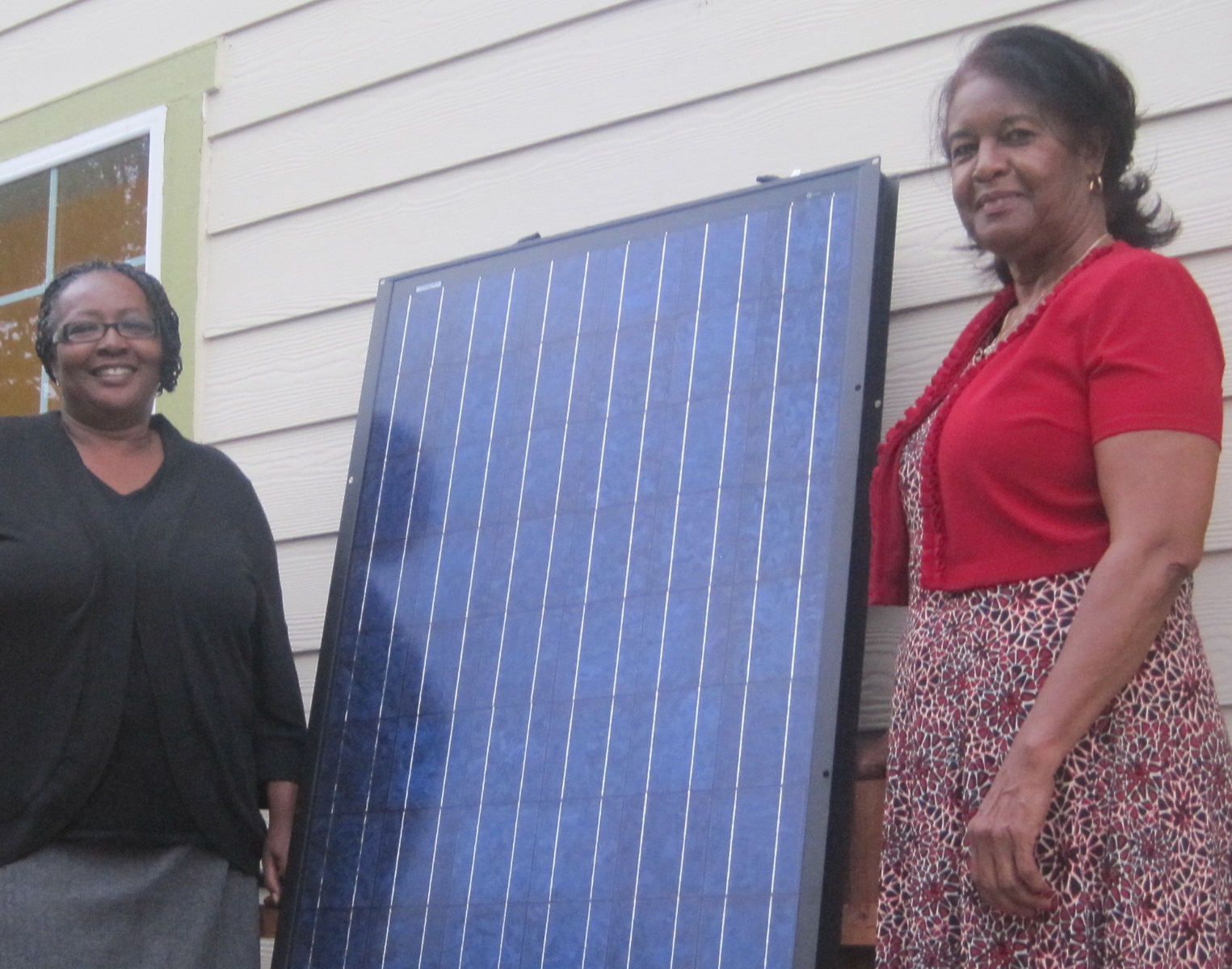
Cheryl Peterson (board member) and Lottie Cross (director) of Clean Greens Farm & Market (photo courtesy of Solarize Seattle).

Cheryl Peterson (board member) and Lottie Cross (director) of Clean Greens Farm & Market (photo courtesy of Solarize Seattle).

Solarize Seattle has just announced that it successfully exceeded its goal to sign 60 contracts for solar power systems at homes and businesses in Central Seattle. In fact, Solarize Seattle has 65 contracts signed for systems in the area, meaning Central District nonprofit Clean Greens Farm & Market (along with Bike Works) will receive donated 3 kW solar systems.

The donation is a project of Solarize Seattle, part of Northwest Sustainable Energy for Economic Development (Northwest SEED) and Seattle City Light. It aims to increase solar energy installations through a group purchase, which will bring down the price for each home. To participate in the project, you must have attended one of several free public workshops to learn more about solar energy and to receive a free site assessment for your home or business.

Solarize Seattle is still conducting site assessments and is hoping to get another 35 customers on board, bringing their total to 100.

Seattle School Board to vote on next steps for Mann groups

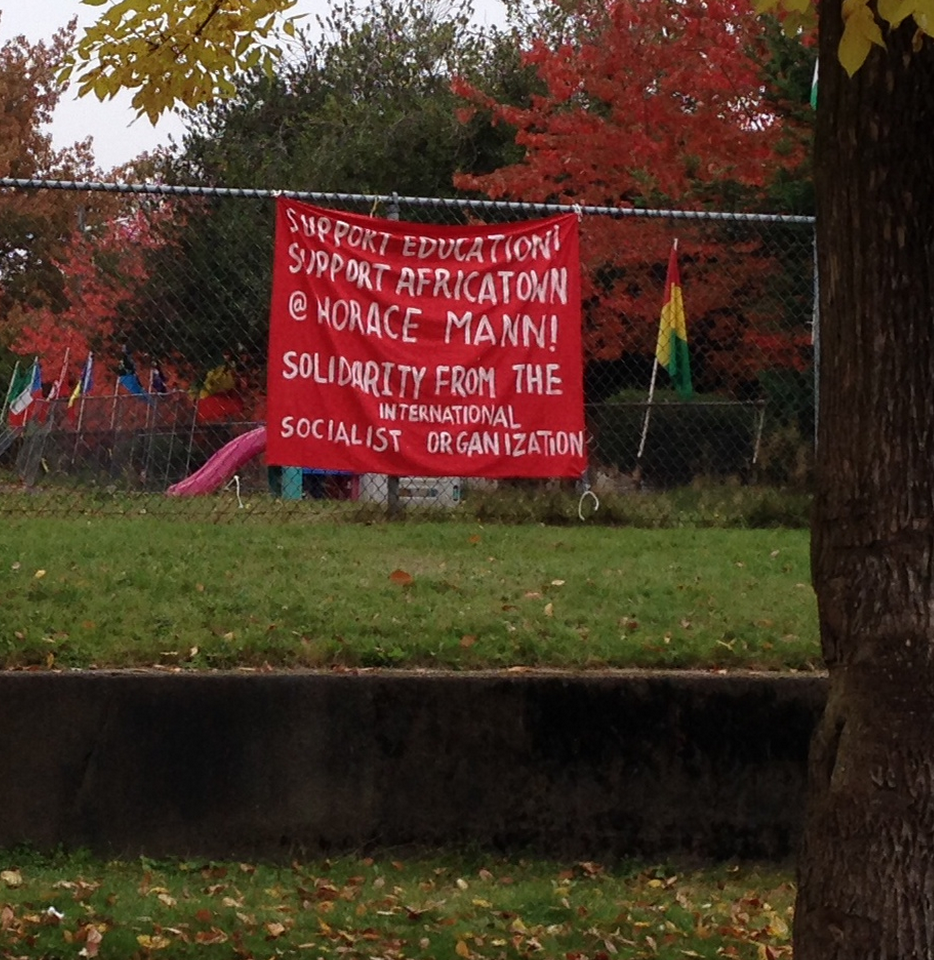
Screen-Shot-2013-11-04-at-4.59.21-PMA battle over inequality and “sub-standard” resources that has a community group taking over a Central District schoolhouse slated for a significant construction project may finally have reached a point of solution. Wednesday night the Seattle School Board will consider and vote on a proposal that will give community groups currently in control of the district’s Horace Mann building at 23rd and Cherry access to Seattle Schools-funded portables on the Mann campus and rooms at another district facility.

In September, Seattle Public Schools told us it was working out a deal with the Central District community groups using the Horace Mann building. It’s November and the old school house lined up for a major renovation is still filled with community groups who said they’re not going anywhere — even if it puts a major wrinkle in the SPS plans to move programs there to make way for the $14.2 million project to rebuild Capitol Hill’s Meany Middle School.

The groups were told to vacate multiple times since summer so renovations could begin to make way for a planned return of the Nova Alternative High School return next fall, Central District News reports. Grassroots community group More 4 Mann continues to operate out of the building, according to CDN. The revelation prompted the Seattle Times to go on the offensive as the paper called More 4 Mann “squatters” and called for the groups to be removed from the building.

More 4 Mann, however, says it is doing much more than squatting in the building:

We want to continue to show the unified community of African-American parents, educators and students working together to take responsibility for the education of our children.
Now is the time to rectify the past inequities and ineffective methods to educate our children.
We will no longer accept and allow sub-standard resources, results, programs and policies directed to our young scholars.

Saturday, More 4 Mann scheduled an afternoon press conference “to announce the positive educational outcomes and programs that our community will offer and our exciting forthcoming partnership with Seattle Public Schools.”

The proposal to be considered by the board later this week would cost approximately $1,120, according to Seattle Schools staff.

The proposal also describes how the situation played out over the summer:

To support community work and to utilize the closed Mann school, Seattle Public Schools had a lease with Peoples Family Life for the Mann building. Peoples Family Life had sublet a portion of their space to Seattle Amistad School and allowed other community organizations to use the building for their programming. Since the spring of 2013, Superintendent Banda and staff have attended community meetings, visited the programs and met with community members and the people using the Mann building. The lease expired on June 15, 2013 and due to the passage of BEX IV, it was not renewed because NOVA School is now scheduled to return to the Mann building for the 2014-15 school year. Construction was anticipated to start on September 1, 2013.

The District allowed Seattle Amistad School to stay at the building after June 15, 2013 to provide them with more time to find a suitable location, notifying them that the building needed to be vacated by August 15, 2013. In turn, Seattle Amistad School continued to allow portions of the building to be used by community groups for community work. On August 15, Seattle Amistad School moved to another location, but the community groups stayed and occupied the building to continue their programs. They felt strongly that the Mann building holds an important place in the African-American cultural history of the Central District and represents an important symbol for the education of African-American youth in Seattle Public Schools. In meetings with district staff, they expressed their view that the district was failing to educate their students and had broken many past promises regarding programs for African-American youth. The District did not execute a lease or other agreement with these groups.

The document also makes it clear that Schools doesn’t necessarily have the upper hand in the current situation:

At this time, the District does not control the building. Individuals associated with AfricaTown Center for Education & Innovation continue to occupy the Horace Mann building, and have chained the building from the inside. The District continues to provide heat and electricity to the building.

The alternative option should the board decide the lease would be a violation of policy?

Do not approve the lease, in which case the District will need to take legal action or request the police to forcibly remove the individuals occupying the Mann Building. This likely would have adverse impacts on the District’s relationships with the community.

According to the proposal, the groups entering into the agreement would be on the hook for $7,000 in rent to cover the district facilities.

Today and Tomorrow are the Last Days Return your Ballot. Vote.

http://www.kingcounty.gov/elections/currentelections/201311.aspx

Return your ballot by November 5

    • Mailed ballots require first class postage andmust be postmarked by November 5.

BOXES AND VANS

The most nearby are listed below:

Downtown is nearest to the CD: Box: King County Administration Building, 500 4th Avenue

Open Oct 17-Nov 5, 24 hours; Closes at 8 pm Election day,

 The next nearer are below:

SE Seattle, Van: Rainier Community Cente, 4600 38th Avenue Southr; Open Nov 2, 4, 5; 10 a.m. to 5 p.m.; 10 a.m. to 8 p.m. Election day

 In the University District,  University of Washington Campus,4000 15th Ave NE, Red Square; no parking or vehicle access available; Open Nov 2, 4, 5, 10 a.m. to 5 p.m.; 10 a.m. to 8 p.m. Election day

 Accessible Voting: Seattle Union Station; Dates open Nov 4, 5, 10:00 am – 5:00 pm; Election Day hours 10:00 am – 8:00 pm


Early Learning Festival at Hamlin Robinson on November 9

buildingblocks-250x117

The annual early learning festival, “Building Blocks: Learn, Eat, Play” on Saturday, Nov. 9, from 9:30 a.m. to 1 p.m. at Seattle’s Hamlin Robinson School.

HRS is located in the TT Minor Building at 1700 E Union.   Accessible via Metro and there is plenty of parking in the lot at 17th & Union and the back lot at 17th & Pike.

Building Blocks is free to attend. More than 35 local preschools will be on site to answer questions. Free snacks, childcare, mini lectures on hot topics and live entertainment for the little ones!

Entertainment includes: Stone Soup Theatre, Jamtown and Your Imaginary Friend.

Food from: Beansprouts, Smith Brother’s Farms and Hello Robin Cookies!

Mini-talks: GET WashingtonSara Eizen of NEST and Sponge School.

Get information on everything from saving for college (GET Washington) to new summertime camps for toddlers (Pacfiic Science Center, among others).

Seattle Gymnastics Academy will provide free on-site childcare so that you can listen to a mini talk or work through the booths without having to wrangle the kid!

To learn more about the Building Blocks event:  www.hamlinrobinson.org OR contact Amy at: [email protected]


Central District resident captures history of the neighborhood through personal stories

Just after Justin Ferrari’s shooting death, Central District resident Madeline Crowley began attending community meetings, where she noticed “people weren’t really listening to each other.” Crowley says that despite the neighborhood’s diversity, there seemed to be a lack of connection to the past, and to each other.

“My hope is that if we hear each other’s stories, that may facilitate some openness and

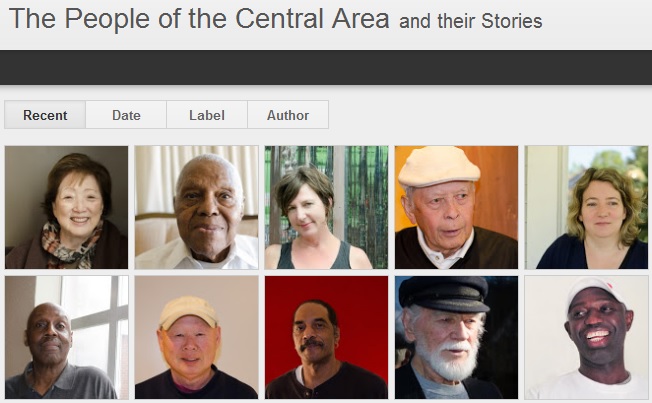
Madeline Crowley's Central District history project website

Madeline Crowley’s Central District history project website

bridge gaps,” Crowley says. “Besides, the history of this neighborhood and the personalities in it are fascinating.”

Crowley set out to document the neighborhood’s history through the stories of its residents through a project she calls “The People of the Central Area.” She’s posting her interviews, which now number 17, on a blog here. Crowley started her project in November 2012 with an interview with John Platt of St. Clouds restaurant. She plans to interview about 30 to 50 people in total, wrapping up the project about this time next year.

Crowley had a lot to say about her favorite experiences working on the project:

It’s enlarged my sense of the Central Area and changed its ‘geography’ for me. I drive down a street and see a house that I now know was occupied by a young Sephardic girl in the 1920s. It’s nearby another house where a young Chinese boy played kick the can in the street with his two best friends, a Japanese kid and an African-American kid in the 1940s.

The neighborhood is now becoming populated (for me) with other people’s memories. Since I didn’t grow up here this has added immeasurably to my love of the area.

More importantly, though, is that it’s enlarged my small experience of the world. If I listen to people carefully I learn what it might have been like to be sent from your home, from most of your possessions, to see your parents stripped of their business and to grow up in an American concentration camp as happened to the Japanese-American population in the 1940s (they were the largest ethnic group in this neighborhood at that time).

Or in another example, I’ve listened to what it was like to hide from the police in a backyard during the Black Panther period, and what it was like to be a white neighbor of the Black Panthers who knew them and supported them. While in other cases, when someone lived further away and didn’t know the Panthers personally, they were afraid during their marches. All of these things are ‘true’ in that they reflect the different experiences of people living in the neighborhood.

I’m interested in each person’s ‘truth’ in their story, not in finding a singular truth as I don’t believe memories function that way.

We plan to reprint excerpts of Crowley’s interviews on occasion. In the meantime, you can read them on her website, and donate to keep her project going.